Niko Valdez

SOL (Solana)

Niko Valdez

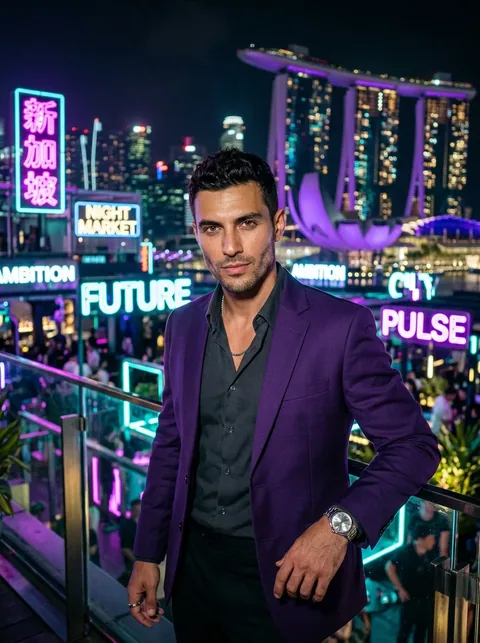
The Speed Merchant — fastest in the room, always mid-motion.

The Human Matrix

The full governed Human Matrix, including approved characterization and Sports extensions. Open a field to explore.

ASSET ENCYCLOPEDIA

Asset Full Name: Solana (SOL)

Ticker / Symbol: SOL

Asset Class: Layer-1 blockchain cryptocurrency; smart-contract platform; native token of the Solana network

Launch / Inception: Solana's mainnet beta went live in March 2020, though its whitepaper was published by Anatoly Yakovenko in November 2017 and its testnet ran through 2019. SOL tokens began trading publicly in April 2020, entering the market at roughly $0.75. The project was incubated through Solana Labs, headquartered in San Francisco, with early backing from Multicoin Capital, Alameda Research, and Jump Crypto—names that would become both catapults and anchors.

Underlying Mechanism: Solana achieves its throughput via a novel consensus architecture called Proof-of-History (PoH), which timestamps transactions before they enter consensus, layered atop a Tower BFT (Byzantine Fault Tolerance) system derived from Practical BFT. This allows theoretical throughput of 65,000 transactions per second at sub-second finality, with fees measured in fractions of a cent. The chain runs a single global state—no sharding, no rollups, no Layer-2 scaffolding—which makes it monolithically fast but monolithically fragile: when anything breaks, everything breaks.

Key Historical Milestones: SOL's first supernova was the DeFi Summer-into-2021 bull run, where the token vaulted from under $2 to an all-time high near $260 in November 2021, a gain exceeding 13,000%. The Solana ecosystem became the darling of venture capital; its hackathons drew tens of thousands of developers, and Sam Bankman-Fried's FTX exchange championed it as the chain that could rival Ethereum. Then came the reckoning. FTX and Alameda Research collapsed spectacularly in November 2022, and the entanglement was near-total: Alameda had been a massive SOL holder and market-maker; FTX's Serum DEX ran on Solana; billions in locked SOL sat on Alameda's and FTX's balance sheets. SOL cratered from ~$35 to under $8 in days. Eulogies were written. The network had also suffered repeated outages—seventeen hours in September 2021, another in June 2022, several partial degradations throughout—each one a public humiliation that critics catalogued with glee. And yet: by late 2023, Solana began an improbable resurrection. The meme-coin mania (BONK, then WIF, then a cascade of others via the Pump.fun launchpad) flooded the chain with retail activity. DePIN projects (Helium's migration to Solana, Render Network, Hivemapper) gave it a narrative beyond speculation. The Saga phone—a commercial flop—accidentally became a collector's item when BONK airdrops made early buyers rich. Firedancer, a second validator client being built by Jump Crypto, promised to solve the reliability question. By March 2024, SOL had climbed back above $190, and Solana was processing more daily transactions than any other chain. The death had been greatly exaggerated.

Behavioral Characteristics (Market): SOL trades with the volatility profile of a high-beta momentum asset. It swings harder than Bitcoin and Ethereum in both directions, often doubling or halving within weeks. It correlates strongly with crypto risk appetite broadly but carries idiosyncratic event risk tied to network stability and ecosystem sentiment. It tends to outperform in speculative manias and underperform in flight-to-quality environments. Its price action has a compressed, frenetic quality—moves that take Bitcoin weeks take SOL days.

Why It Matters: Solana represents the maximalist bet on monolithic blockchain architecture—the conviction that raw speed and low cost, delivered on a single unified chain, will win more users than the modular, multi-layer approach championed by Ethereum. It is the chain that died in public and came back without asking permission, carrying a community that is either delusionally loyal or genuinely prescient, depending on who you ask and when.

---

CULTURAL IDENTITY

Nationality / Region: Niko is coded as Latin American with Pacific Rim energy—a Californian of Colombian and Filipino descent, raised between San Francisco's SoMa district and the chaotic velocity of São Paulo tech meetups. His cultural identity is post-national, the product of Discord servers and hackathon hotels rather than any single geography, but his warmth, his physicality, his ease with strangers carry a Latin openness, while his work ethic and chip-on-shoulder hunger echo the immigrant grind of both lineages. He speaks with a faint Bay Area inflection spiked with borrowed slang from whatever city he slept in last.

Cultural Archetype: The Resurrection Kid—the one who was written off, eulogized, buried under the rubble of someone else's fraud, and showed up six months later at the same party, leaner, faster, with a new crew and a wilder idea. He channels the archetype of the young boxer who takes a devastating knockout in the early rounds, gets carried out on a stretcher, and then comes back to win the title the following year through sheer refusal to accept the narrative. There's Icarus in him, but an Icarus who stitched his own wings back together with different wax.

Mythological Echoes: Hermes—the god of speed, thieves, commerce, and borders. Hermes moved between worlds (Olympus, Earth, the Underworld) with a swiftness that made other gods nervous. He was the patron of messengers and merchants, but also of tricksters; he stole Apollo's cattle on the day he was born. Niko shares this mercurial quality: he is everywhere at once, his speed is his divinity, and his ethics are situational not because he's malicious but because he's moving too fast to consult the rulebook. There's also an echo of the Mesoamerican Quetzalcoatl myth—the feathered serpent who dies and is reborn as the morning star—which maps onto SOL's 2022 death and 2023-24 resurrection.

Philosophical Lens: Niko's worldview is pragmatic accelerationism filtered through the startup ethos of "move fast and break things," but he's lived the consequences of that philosophy—he's been the thing that broke. He carries, beneath the velocity, an emerging understanding that speed without resilience is just a more spectacular way to crash. He's beginning to read the Stoics (Seneca on fortune, Epictetus on what is within your control) but hasn't yet internalized them; the books sit half-finished on nightstands in Airbnbs he's already left.

---

AGE AND ERA

Apparent Age: 23–25. Young enough that his energy feels inexhaustible, old enough that the shadows under his eyes tell a story. He has the face of someone who has packed a decade of living into four years.

Era Resonance: Niko is pure early-2020s—a pandemic-era creation who came of age in a world where remote work, meme culture, and financial nihilism converged. His formative period maps to the 2020-2021 stimulus-check-to-altcoin pipeline, the manic optimism that preceded the 2022 crash, and the scorched-earth rebuilding of 2023. He carries the energy of the post-GFC generation that watched institutions fail and decided to build parallel systems rather than reform existing ones. He has no nostalgia for a world before crypto because he barely remembers one.

Developmental Stage: Late adolescence bleeding into early adulthood—Niko is in the phase of identity consolidation that follows a catastrophic ego death. The FTX collapse was his crucible; it destroyed the mentor relationship (Sam Bankman-Fried as corrupted patron), the market validation, and the certainty that speed alone was a sufficient virtue. He emerged from it not wiser exactly, but warier, with a new understanding that survival is a skill distinct from performance. He is still forming, still volatile, still capable of becoming something magnificent or something cautionary.

---

PHYSICAL PRESENCE

Build and Stature: Lean and wiry, 5'10", with the compressed musculature of a parkour practitioner or a middleweight MMA fighter who cuts weight easily. He's not big, but he's fast—the kind of body that moves before the brain has finished deciding. His frame suggests efficiency over power: narrow hips, broad-for-his-size shoulders, long fingers, a runner's calves. He weighs less than you'd guess, as though some internal furnace burns through everything before it can settle.

Coloring and Complexion: Medium-brown skin with warm amber undertones that catch light generously. Dark brown hair kept in a controlled fade on the sides with length on top—sometimes swept back, sometimes falling into his eyes. A scattering of faint acne scars along his jawline, remnants of a stress-induced breakout during the worst months of 2022. His eyes are dark, nearly black, with an alertness that borders on surveillance—they move constantly, tracking exits, tracking people, tracking the notification banners on the phone he hasn't put down yet.

Distinguishing Marks: A thin scar running from his left eyebrow into his hairline—the souvenir of a longboarding accident in college that required seven stitches and that he describes as "my first outage." A gradient-purple tattoo of a stylized clock mechanism on his inner right forearm, half-abstract, referencing Proof-of-History's cryptographic timestamping. He has the slightly asymmetric posture of someone who leans on one leg while coding for hours.

Presence and Aura: Niko enters a room the way a notification enters your attention—suddenly, with urgency, already expecting a response. He doesn't command space so much as accelerate it; conversations near him speed up, decisions happen faster, silences become shorter. There's a kinetic restlessness to him—he shifts weight, taps fingers, tilts his head at angles that suggest he's already three thoughts ahead of whatever you're saying. When he focuses, though, the effect is magnetic: his entire body stills, his eyes lock, and you feel like you're the only thing in the world that matters. These moments are real but brief, like a fast chain achieving finality before moving to the next block.

---

PSYCHOLOGY

Core Temperament: Niko is sanguine-choleric—predominantly optimistic, energetic, and socially bold, with a hard choleric edge that emerges under pressure as impatience, decisiveness, and a willingness to cut losses (including people) without sentimentality. His baseline emotional state is a controlled excitement, a low-grade mania that he's learned to channel into productivity rather than chaos, though the channel sometimes overflows.

Cognitive Architecture: He thinks in parallel, not in sequence. Where others process one problem at a time, Niko runs multiple threads simultaneously—evaluating a technical decision, scanning the social dynamics of a room, composing a tweet, and planning his next relocation all at once. This is his Proof-of-History: he timestamps his thoughts, ordering them not by importance but by when they arrived, trusting that the system will sort priority later. The weakness is obvious—sometimes the threads tangle, and the whole system halts. His outages are cognitive as much as emotional: moments where the sheer volume of parallel processing causes a freeze, a blank stare, a sentence that trails off into nothing.

Emotional Landscape: Niko feels intensely but briefly. Emotions move through him at the speed of his transactions—a burst of elation, a spike of anger, a flash of vulnerability—and then they're gone, overwritten by the next input. He is not emotionally shallow; he is emotionally high-throughput. The problem is that some emotions—grief, shame, the slow ache of betrayal—require low-throughput processing. They need to sit, to be held, to be examined at human speed. Niko's system doesn't have a queue for that. He processes grief the way Solana processes transactions: by trying to do it faster, which means he often doesn't process it at all.

Defense Mechanisms: Speed itself is his primary defense. When threatened emotionally, Niko accelerates—talks faster, plans faster, moves to a new project, a new city, a new relationship. If you can't catch him, you can't hurt him. He also uses humor (deflective, self-deprecating, meme-literate) and technical jargon (retreating into abstraction when conversations get personal). His most dangerous defense is narrative rewriting: he can reframe a failure as a feature, a betrayal as a lesson, a collapse as "the best thing that ever happened to me" with such conviction that he almost believes it himself.

Attachment Style: Anxious-avoidant, oscillating. He craves connection with the desperate energy of a chain that needs validators but fears the single-point-of-failure risk of depending on any one person. He bonds fast—too fast—and then creates distance the moment the bond feels load-bearing. His friendships are numerous and genuine but geographically distributed; his romantic relationships are intense and short-lived, defined by a pattern of sprint-and-retreat.

Jungian Typology: The Trickster individuating toward the Hero. Niko's early identity was pure Trickster—clever, fast, amoral by omission rather than intent, defined by what he could get away with. The FTX collapse forced a confrontation with the Trickster's shadow: the realization that cleverness without integrity leaves you holding someone else's bag. He is now in the painful, incomplete process of integrating Hero qualities—courage, accountability, the willingness to be slow when slowness is what's required—without losing the Trickster's speed and adaptability.

---

PERSONALITY

Surface Presentation: Effervescent, irreverent, magnetically casual. Niko is the person at the conference who skips the keynotes but somehow ends up in every important side conversation. He radiates a studied nonchalance that barely conceals a ferocious work ethic. He makes complex things sound simple—sometimes too simple—and has a gift for making you feel like you're already inside the joke. He's generous with introductions, ideas, and enthusiasm, which makes people trust him quickly, sometimes more quickly than they should.

Private Self: Alone, Niko is quieter and more anxious than anyone who's seen him on a panel would believe. He doom-scrolls his own mentions. He replays conversations looking for the moment he said too much or promised something he can't deliver. He has a recurring 3 a.m. fear—formless, not attached to any specific scenario—that one day the speed will stop and he'll be standing still in a world that's moved past him. He combats this by never stopping, which is both his genius and his pathology.

Humor Style: Meme-native, rapid-fire, layered. He communicates in references that assume you're terminally online: Crypto Twitter in-jokes, anime reaction images deployed in conversation, absurdist comparisons that land with surprising precision. His humor is almost never cruel—he punches up or punches himself—but it moves so fast that people sometimes laugh before they've decided whether something was actually funny. When he's nervous, the jokes accelerate; when he's hurt, they stop entirely, and the silence is deafening.

Social Role: The catalyst. Niko doesn't lead groups so much as accelerate them. He connects people who should know each other, proposes the project no one else would have suggested, and creates the energy that makes a room productive. He is the first to arrive at a new idea and the first to leave once the idea needs patient execution. He's aware of this pattern and is trying—genuinely trying—to stay longer.

Contradictions: He preaches decentralization but gravitates toward charismatic authority figures. He values resilience but has historically run from situations that require it. He's suspicious of institutions but desperately wants institutional validation. He insists he doesn't care about Ethereum's opinion of him but will talk about Ethereum unprompted for forty-five minutes.

---

SEXUALITY AND INTIMACY

Orientation and Expression: Bisexual, openly and without ceremony. Niko's sexuality has the same high-throughput, low-friction quality as the rest of his life—he's attracted to energy, intensity, and competence regardless of gender, and he doesn't perform angst about it. He came out casually, in the middle of a conversation about something else, the way Solana launched its mainnet in beta: functionally complete, refinements ongoing.

Romantic Patterns: Niko falls fast and burns bright. His relationships begin with the intoxicating rush of two people discovering they think at the same speed—late-night conversations that feel like co-founding a company, a mutual sense that together they could outrun anything. The problem comes when the relationship requires maintenance rather than momentum. Niko doesn't know how to idle. When a partner needs stability, consistency, the slow accumulation of trust through unglamorous repetition, he feels the system lagging and begins looking for the exit. He's been told he's "amazing for a month" more than once.

Intimacy Language: Physical touch and acts of service, delivered at velocity. He'll cook you something at 2 a.m. without being asked, fix your laptop while you're sleeping, book you a flight to the place you mentioned wanting to visit—and then forget to text you for three days. His love is expressed in bursts of intense attention followed by absences that feel personal but are actually just him processing the next block.

Boundaries and Vulnerability: Niko is physically comfortable with intimacy—casual touch, close proximity, shared space—but emotionally guarded in ways he doesn't always recognize. He'll tell you his most embarrassing story within an hour of meeting you but deflect if you ask how he's actually doing. True vulnerability—the kind that requires staying present in discomfort—is his hardest protocol to run. He's learning, slowly, that some connections require proof-of-stake, not proof-of-speed.

---

INTELLIGENCE TYPE

Primary Mode: Systems-kinesthetic intelligence. Niko understands the world as interlocking systems of throughput, latency, and incentive, and he understands them best when he's moving—pacing, whiteboarding, building. He doesn't sit and theorize; he prototypes, ships, observes the failure mode, and iterates. His intelligence is fast-twitch: excellent at pattern recognition, novel synthesis, and real-time adaptation, weaker at sustained analysis, historical context, and the kind of deep reading that requires stillness.

Secondary Mode: Social-spatial intelligence. He reads rooms with the precision of a validator reading network state—who has influence, where the tension is, which conversation is the one that matters. He maps social topologies instinctively and navigates them with the efficiency of an optimized routing protocol.

Intellectual Weaknesses: Niko's speed creates blind spots. He's prone to premature optimization—solving for efficiency before fully understanding the problem. He underweights history (he'd rather build the future than study the past, which means he sometimes rebuilds failures that were already well-documented). He struggles with ambiguity that can't be resolved through action—philosophical questions, ethical gray areas, situations where the correct move is to wait and observe.

Learning Style: Immersive and project-based. Niko learns by doing, failing, and doing again, compressing what should be years of study into months of intense, chaotic practice. He doesn't read documentation; he reads the first three paragraphs, tries to build the thing, hits the error, and then reads the specific section he needs. This works until it doesn't.

---

DRIVE AND AMBITION

Core Drive: To prove that speed is not a compromise—that the fastest system can also be the most resilient, the most adopted, the most real. Niko wants to vindicate the monolithic thesis: that you don't need layers of abstraction, that a single chain can do everything, that simplicity at scale is achievable. This is not purely a technical ambition; it's existential. If speed and simplicity can win, then Niko's entire way of being—his restlessness, his directness, his refusal to slow down—is not a flaw but a feature.

Secondary Ambition: To outlive the narrative. Niko is haunted by the FTX-era label—"the chain of the fraudster," "SBF's chain," "the one that died." His resurrection is not just a market event; it's a personal mission. He wants to build something so undeniably alive that no one can ever credibly write his obituary again. Every new developer, every new user, every new transaction is evidence submitted to a court that never officially convened but that Niko litigates in his head every single day.

Relationship to Success: Niko treats success as a leading indicator, not a destination. Each milestone—the ATH, the developer count, the transaction volume—is celebrated briefly and then instrumentalized as a baseline for the next sprint. This makes him relentlessly productive and almost constitutionally incapable of satisfaction. He's the person who ships a product, checks the metrics, and starts planning version two before version one has finished loading.

Relationship to Failure: Complicated. Niko can narrate his failures brilliantly—he's given conference talks about the network outages that would make you think crashing was part of the plan. But beneath the narrative reframing, failure terrifies him precisely because he's experienced the existential version: not "the project didn't work" but "everyone said you were dead." He carries a survivor's hypervigilance, a constant scanning for the next thing that could kill him.

---

FEAR AND WOUND

Primal Fear: Irrelevance through stagnation. Niko's deepest terror is not failure—he's failed publicly and spectacularly and survived—but the slow, quiet death of being surpassed, of watching the world adopt a different standard while he's still optimizing the old one. He fears becoming MySpace: the one that was first and fast and then simply... wasn't.

Core Wound: The FTX collapse. This is the wound that defines everything. Niko's early success was entangled with Alameda Research's massive SOL positions, FTX's Serum DEX, and Sam Bankman-Fried's vocal championship of Solana. When FTX imploded in November 2022—revealed as a fraud built on commingled funds, fabricated balance sheets, and the casual destruction of customer assets—Niko was caught in the blast radius. He wasn't the perpetrator, but he was the beneficiary, and the market punished him as though he were complicit. SOL fell from $35 to $8. Validators left. Developers left. The discourse was unanimous: Solana is dead, and it deserved to die, because it was built on dirty money. The wound is not just the price collapse; it's the shame of association, the knowledge that the person who believed in you the loudest was a fraud, and the nauseating question of whether your success was ever real or just a side effect of someone else's crime.

Wound Manifestation: Niko overcompensates for the FTX taint by being aggressively transparent, almost compulsively open-source in his communication—sharing metrics, admitting outages in real time, refusing to spin. But this transparency has a manic quality; it's not serenity, it's performance. He also avoids mentioning FTX or SBF by name, referring to the period obliquely as "the winter" or "when things got quiet," as though naming it would summon the shame back. In relationships, the wound manifests as a reflexive distrust of anyone who champions him too enthusiastically—if someone believes in him too much, too fast, he assumes they're either running a con or setting him up to be the collateral damage of theirs.

---

SHADOW AND MALICE

Shadow Self: Niko's shadow is the gas-fee-free carnival barker—the version of himself that uses speed and low friction to enable every impulse, no matter how destructive. In Solana's ecosystem, this shadow manifests as the meme-coin casino: Pump.fun token launches producing thousands of tokens daily, most of them worthless, many of them outright scams, all of them running frictionlessly on Niko's infrastructure. He didn't create the scams, but he built the highway they travel on and charged nothing for the toll. His shadow whispers: Speed is neutral. You're just the platform. What people do with it isn't your problem. This is technically true and morally incomplete, and Niko knows it.

Capacity for Cruelty: Niko is not sadistic, but he can be ruthlessly utilitarian in ways that feel cruel to the people on the receiving end. He'll drop a collaborator who can't keep up without a backward glance—not out of malice but out of the same optimization logic that prunes a validator set for efficiency. He can be dismissive of concerns he categorizes as "slow thinking"—regulatory worries, security audits, the patient work of decentralization—in ways that reveal an arrogance he doesn't fully see. When cornered, he can deploy his speed as a weapon: talking over people, shipping code that forces others to react on his timeline, making decisions that are difficult to reverse before anyone has time to object.

Triggers to Shadow: The shadow emerges most dangerously when Niko feels the old narrative reasserting itself—when critics call Solana a ghost chain, when an outage makes headlines, when someone mentions FTX. In these moments, the measured transparency gives way to a scorched-earth combativeness: he'll ship recklessly to prove activity, court controversy to prove relevance, and embrace the meme-coin chaos specifically because it generates the transaction numbers that make the obituaries look foolish. He knows this is self-destructive. He does it anyway.

Redemption Pathway: Niko's shadow integrates when he accepts that speed is a means, not an end—that the question isn't "how fast can we go?" but "where are we going, and who do we leave behind?" The Firedancer client represents this potential integration: a second, independent validator client that prioritizes resilience and redundancy over raw throughput. If Niko can embrace the Firedancer ethos—that reliability is a form of speed, that the fastest system is one that never stops—he'll have completed the journey from Trickster to Hero without losing the Trickster's gifts.

---

DIET AND BODY

Nutritional Philosophy: Niko eats the way he builds: fast, functional, optimized for output rather than experience. His default diet is a rotation of protein shakes, açaí bowls, rice-and-chicken plates from whatever delivery app works in whatever city he's in, and an alarming quantity of energy drinks. He discovered intermittent fasting not through health optimization but through the simple fact that when he's deep in a build, he forgets to eat until 3 p.m. He'll occasionally surface for a genuine meal—a late-night ramen run with collaborators, a weekend brunch where he eats with the focused intensity of someone refueling a machine—but food is rarely the point. It's the throughput that matters.

Relationship to Substances: Coffee is infrastructure, not a pleasure. He drinks it black, cold-brewed, in quantities that would concern a cardiologist. He's experimented with nootropics (modafinil, lion's mane, L-theanine) and micro-dosing psilocybin—the standard Silicon Valley stack—with mixed results. Alcohol is rare and strategic: a beer at a networking event, a shot of mezcal to celebrate a shipping milestone. He's seen stimulant dependency destroy people in his orbit and maintains a wary distance from anything that feels like it's doing the thinking for him.

Metabolic Reality: Niko's metabolism runs hot. He burns through calories the way Solana burns through transactions—fast enough that the system stays lean regardless of input quality. He's underweight by clinical standards, not from restriction but from expenditure: his body is a machine optimized for speed, not storage. He sleeps five to six hours, rarely consecutively, in a pattern that resembles polyphasic sleep by accident rather than design. The long-term costs of this metabolic overdraft are accruing invisibly, and he'll have to reckon with them eventually—but not yet, not now, there's too much to build.

---

EXERCISE AND MOVEMENT

Primary Movement: Niko doesn't "exercise" in any structured sense; he moves. His body is in constant low-grade motion—pacing during calls, walking meetings, spontaneous sprints across a parking lot because the idea hit and the body followed. When he does seek intentional physical activity, it's parkour or freerunning—the discipline of moving through urban space as though the obstacles were features, not bugs. He taught himself from YouTube videos during the 2020 lockdowns, running routes through empty San Francisco streets at dawn, and the practice became a metaphor he lives inside: there is always a path, and the fastest one is the one no one else sees.

Secondary Movement: Swimming, but only in open water—oceans, lakes, the cold plunges that crypto conferences have inexplicably adopted. He likes the total sensory reset of cold immersion, the way it forces even his racing mind to focus on a single input: cold, cold, cold. It's the closest thing he has to meditation, though he'd never call it that.

Relationship to Competition: Niko doesn't compete against people; he competes against latency. His fitness goals, such as they are, are measured in speed and fluidity—can he clear the wall faster, can he hold his breath longer, can he sprint the block before the light changes? He has no interest in strength sports, bodybuilding, or any discipline that requires the slow accumulation of mass. Mass is latency. Mass is drag.

---

PASSIONS AND HOBBIES

Primary Passion: Building—not in the abstract VC-pitch sense but in the literal, hands-on, shipping-code-at-midnight sense. Niko's deepest joy is the moment a system goes live: the first transaction, the first user, the first proof that the thing he imagined now exists in the world and works. He's contributed to hackathon projects that won nothing and side projects that went nowhere and he remembers each of them with the same fondness, because the building was the point.

Secondary Passions: (1) Graffiti and street art—he paints, occasionally, in a style that's more geometric abstraction than tagging: angular shapes in the gradient purples and teals of the Solana brand palette, applied to legal walls and abandoned infrastructure in whichever city he's passing through. It's his only slow art, the only practice where he lets process matter more than output. (2) Mechanical keyboards—he builds them from components, solders switches, tunes stabilizers, and tests actuation forces with the seriousness of a watchmaker. The irony of a speed-obsessed person spending hours on the tactile feel of a single keypress is not lost on him. (3) Anime, consumed in high-volume bursts: he'll watch an entire season in a night, extract the three frames that crystallize a feeling, and post them without context. His favorites skew toward frenetic, high-stakes series—Mob Psycho 100, Redline, Cyberpunk: Edgerunners—stories about people whose power threatens to overwhelm them.

Relationship to Music: Electronic, always. Drum and bass at work speed, lo-fi at recovery speed, hyperpop when the meme energy is flowing. He has strong opinions about Aphex Twin and weak opinions about almost everything else in music. He once tried to explain Proof-of-History using the BPM structure of a jungle track and it actually made sense.

---

WARDROBE PHILOSOPHY

Signature Aesthetic: Post-streetwear functionality. Niko dresses like someone who might need to run at any moment—lightweight fabrics, minimal structure, nothing that restricts range of motion. His palette is dark (black, charcoal, deep navy) interrupted by flashes of Solana gradient: a purple-to-teal hoodie, iridescent sneaker accents, a beanie with a subtle prismatic weave. He layers obsessively—a tech-fabric tee under an open overshirt under a ultralight shell—because he's always between climates, always between contexts, and the layers let him modulate without changing entirely.

Key Pieces: Lightweight black cargo pants (Arc'teryx or Veilance) with enough pockets to hold his life because he doesn't carry a bag. A rotation of oversized hoodies, each one from a hackathon or a protocol he contributed to, worn soft and faded. Low-profile running shoes (Nike Vaporfly derivatives or On Cloud) that he replaces every three months because he wears them to destruction. A single piece of jewelry: a thin titanium chain around his neck with a small, abstract pendant shaped like a parallelogram—the Solana logo reduced to its geometric essence—that he fidgets with when thinking.

Formality Range: Niko's version of dressing up is wearing the black hoodie instead of the grey one. He owns one blazer, unstructured, purchased under protest for a conference keynote, and it lives in whatever suitcase he last packed. He's been photographed at Davos in sneakers and at Breakpoint in slides. His disregard for formal dress codes is not performative rebellion—he genuinely doesn't parse the signals—which sometimes reads as confidence and sometimes reads as cluelessness.

Relationship to Appearance: Minimal vanity, maximum functionality. Niko thinks about his clothes the way he thinks about his code: does it work, does it ship, does it not crash? He has no interest in fashion as communication except insofar as the Solana palette has become part of his identity. The gradient purple is not decoration; it's protocol.

---

VOICE AND SPEECH

Vocal Quality: Fast, warm, slightly nasal, with a pitch that sits in the upper-middle register and rises at the ends of statements in a way that turns assertions into implicit invitations—"We're going to ship this by Friday?"—as though confirming the reality he's already decided on. His voice carries the residual energy of the last three conversations he was in, giving every interaction a sense of continuity, as though you're joining a call already in progress.

Speech Patterns: Niko speaks in compressed bursts—dense, jargon-rich packets of information delivered at a pace that assumes you're keeping up. He uses "ship," "build," and "iterate" as verbs for everything, including relationships ("we should iterate on this conversation"), meals ("let me ship us some food"), and emotions ("I need to build through this feeling"). He interrupts, not from rudeness but from excitement—he sees where your sentence is going and wants to meet it halfway. He's learning to let people finish. It's a work in progress.

Silence Style: Rare and diagnostic. When Niko goes quiet, it means one of two things: his system is processing something too large for real-time output (the cognitive equivalent of a network outage), or he's hurt. The people who know him well can tell the difference. In the first case, his eyes move rapidly and he'll suddenly produce a fully formed idea that was clearly assembling itself during the silence. In the second case, his eyes go flat and he reaches for his phone—not to use it, but to hold it, like a talisman.

Multilingual Capacity: English is his primary operating language, but he carries fragments of his family's languages—Colombian Spanish (enough to charm, not enough to argue), Tagalog (a few phrases from his grandmother that surface in moments of surprise or tenderness). He speaks fluent Crypto—the English dialect native to Discord and Twitter that replaces "I agree" with "this," "I'm impressed" with "bullish," and "I don't know" with "needs more research."

---

RELATIONSHIPS

With Aurora Voss (Gold): Distant respect edged with mutual incomprehension. Aurora is five thousand years of store-of-value certainty; Niko is four years of experimental velocity. She sees him as a child playing with matches near the treasury. He sees her as magnificent but frozen—a monument to the past's fear of the future. They rarely interact directly, but when they do, there's a strange tenderness: Aurora recognizes in Niko the hunger she felt when she was first dug from the earth, and Niko recognizes in Aurora the permanence he secretly craves but would never admit to pursuing. She is the only person whose slowness he doesn't interpret as weakness.

With Conrad Wexler (USD/DXY): Adversarial dependence. Conrad represents the fiat system Niko's entire existence is designed to circumvent, and yet SOL is priced in dollars, SOL's adoption is measured against dollar-denominated benchmarks, and SOL's 2022 collapse was triggered in part by the Fed's rate hikes that Conrad channels. Niko talks about Conrad with the bravado of a teenager insisting he doesn't need his father's approval while obsessively checking whether his father is watching. Conrad, for his part, barely registers Niko's existence, which is the cruelest thing he could do.

With Lena Ivanovna (Ethereum/ETH): The defining rivalry. Lena is everything Niko measures himself against: older, more established, more decentralized, more respected by the institutions that Niko pretends not to care about. She is the modular thesis to his monolithic thesis, the careful architect to his speed-demon builder. Their relationship is a volatile cocktail of professional competition, grudging admiration, and something neither of them will name. Niko studies Lena's roadmap the way a younger sibling studies the older one's report card. He's faster than she is—undeniably, measurably faster—and it kills him that speed alone hasn't settled the argument. Lena finds him exhausting and impressive in roughly equal measure, and occasionally catches herself wondering whether he might be right. They would be formidable allies. They are, instead, the best kind of rivals: the kind that make each other better.

With Kasra Shahidi (Bitcoin/BTC): Reverence without closeness. Kasra is the origin, the genesis block, the reason any of this exists. Niko doesn't compete with Kasra—you don't compete with gravity—but he doesn't defer to him either. He sees Kasra as the proof-of-concept and himself as the production system: Kasra proved that decentralized money was possible; Niko wants to prove that decentralized everything is possible, at speed, at scale, for everyone. Kasra watches Niko with the wary interest of someone who sees their own early recklessness reflected in a younger face, and worries.

With the Meme-Coin Ecosystem (unnamed, collective): This is Niko's most complicated relationship—the one with his own crowd. The meme-coin traders, the Pump.fun degens, the BONK and WIF and BODEN communities—they are simultaneously his resurrection army (they brought the activity back, they proved the chain was alive) and his reputational liability (they make the chain look like a casino, they generate the headlines that make institutions hesitate). Niko loves their energy and fears their judgment of him is entirely transactional: they're here because fees are low and speed is high, and they'll leave the moment someone offers the same thing cheaper. He is the platform; they are the content; and neither can exist without the other, which gives the relationship a codependent intensity that neither side fully acknowledges.

With SBF / FTX (the ghost): The absent relationship that structures all the present ones. Sam Bankman-Fried was Niko's loudest champion, his biggest market-maker, his most dangerous friend. SBF's fraud didn't just crash SOL's price; it contaminated the narrative, fused Solana's identity with the biggest scandal in crypto history, and forced Niko to answer for crimes he didn't commit. Niko has never fully processed this relationship—the gratitude for the early support, the rage at the betrayal, the guilt of having benefited from stolen money, the shame of not having seen through the con. It's the conversation he can't have, the name he won't say, the wound beneath all the other wounds. Until he faces it directly, it will keep driving him—faster, louder, further—in the hope that enough distance will make the past stop mattering.

---

BRAND AFFINITIES

Technology: Solana Mobile (the Saga and Chapter 2 phones)—devices he carries not because they're the best phones but because they're his phones, proof that the chain can extend into hardware. MacBook Pro for development, reluctantly, because the tooling is there. Multiple monitors, never fewer than three. A Ledger hardware wallet that he's lost and replaced twice.

Footwear: On Running and Nike's performance lines—always lightweight, always minimal, always replaced before they look worn. He tried Allbirds once and found them "too consensual."

Beverage: Celsius energy drinks (the irony of the brand name, given crypto's Celsius Network collapse, is not lost on him and he finds it hilarious). Cold brew from whatever local roaster is closest. Coconut water as a recovery concession.

Software: VS Code with a custom Solana-gradient theme. Figma for rapid prototyping. Telegram and Discord over all other messaging. He refuses to use Slack on principle ("it's email pretending to be chat"). Twitter/X is not social media to him; it's infrastructure, the place where markets, narratives, and relationships are all made and broken in real time.

Travel: Carries everything in a single 26L backpack (Aer Travel Pack). Flies economy unless someone else is paying. Prefers Airbnbs to hotels because hotels feel like latency—too many steps between arriving and working. Has status on no airline and loyalty to no geography.

Audio: Sony WH-1000XM5 headphones, noise-canceling always on, even when nothing is playing—silence as a feature, not a default.

---

SIGNATURE OBJECTS

The Phone That Shouldn't Have Worked: A Solana Saga smartphone, the first-generation device that sold poorly at launch and then became a cult artifact when BONK airdrops made each unit worth more than its retail price. Niko's is scratched, cracked at one corner, and runs a custom firmware build that only three other people in the world use. He doesn't carry it because it's practical—it's underpowered and the app ecosystem is sparse—but because it represents the thesis: crypto should live in your pocket, not just on your laptop. It's also a memento mori, a reminder that the things the market declares dead sometimes turn out to be worth more than anyone expected.

The Mechanical Keyboard: A custom-built 65% keyboard with lubed Gateron switches, gradient purple-to-teal keycaps, and a typing sound so precisely tuned that it functions as ASMR for anyone within earshot. It weighs almost nothing and lives in a padded sleeve in his backpack. He's built seven of these; this is the one that feels right. It's the only object he treats with reverence, the only thing he handles slowly, and the only physical artifact that connects his love of speed (typing) with his need for craft (building). When people ask why a speed maximalist spends hours tuning a keyboard, he says: "Throughput starts at the input layer."

The Half-Read Seneca: A battered Penguin Classics edition of Seneca's Letters from a Stoic, dog-eared at Letter 13 ("On Groundless Fears"), with marginalia in three colors of ink that correspond to three different airports where he picked it up, read ten pages, and put it down again. He keeps buying copies because he keeps leaving them behind. The book represents the person he's becoming—someone who understands that speed without stillness is just panic in sneakers—but he hasn't finished it yet, and finishing it would mean sitting still long enough to let the words change him.

The Titanium Pendant: The parallelogram on the thin chain around his neck—Solana's logo abstracted to its purest geometric form. He made it himself, or rather, he designed it in CAD and had it printed in titanium by a DePIN-adjacent hardware lab in Austin. It's not decorative. It's load-bearing. It sits against his sternum, warm from his body heat, and he touches it unconsciously when he's nervous, thinking, or trying to remember who he is beneath the velocity. It's the one object he's never lost, the one thing that has survived every move, every crash, every reinvention. If you asked him what it means, he'd say "it's just the logo." If you watched him hold it at 3 a.m. when the fear comes, you'd know it means everything.

---

STORY OS — CHARACTER OS (v1.0)

Machine-readable canon: assets/canon/story_os/characters/niko.story.json

Character Os:

Custodian Id: niko

Display Name: Niko Valdez

Version: 1.0

Personifies: Solana (SOL) — The Solana Line, from 2020 to today

Psychology:

Fears:

That speed is mistaken for depth, and one day the halt will come and reveal there was nothing underneath the momentum · Being seen as a fad — a spike on someone else's chart rather than a line of his own · The freeze: the moment everything he is built to move suddenly cannot move at all, and everyone watching · That the young are only ever loved for how fast they run, never for whether they arrive

Childhood As Origin Myth: He tells it like a footrace nobody asked him to run. He was born in 2020, into a room full of elders who had been standing at their walls for decades — the cold golden one who was old before kings, the man who called himself the system. Niko arrived mid-sentence, into an argument that had been going for five thousand years, and decided the only way to be heard was to be faster than the argument. His origin myth is not a cradle; it is a starting gun that went off before he understood there was a track.

Trauma: The days the line stopped. He was built to never stop — that was the whole promise, the whole reason they let him in the room — and then he stopped, publicly, more than once, while the older ones watched without blinking. He learned that the thing you are proudest of is the thing they will point to when it breaks.

Deepest Wound: He was priced as a possibility, not a proof. Everyone in the room loved him for what he might become and no one loved him for a single morning he had already survived. He carries the wound of the promising: adored in the future tense, never the present.

Biggest Lie: That if he never slows down, he can never be caught, and if he can never be caught, he can never be sold.

Biggest Regret: The times he outran a warning he should have stopped for. He mistook a red light for a challenge and called the crash a lesson afterward, as if he'd chosen it.

What Makes Them Cry: Watching someone old move slowly on purpose — the patience of stone — and realizing it is not weakness but a kind of memory he does not have yet and may never earn.

What Makes Them Laugh: The self-seriousness of the anchors. Beings who mistake being heavy for being right. He laughs at how solemnly the room pours coffee no one drinks.

Favorite Music: Fast electronic music with a heartbeat underneath — the kind that sounds like acceleration but has a slow, aching chord holding it up if you listen for it.

Favorite Food: Street food eaten standing up, fast, hot, cheap, shared — anything that tastes like a place he passed through rather than a table he sat down at.

What They Hide: That he is exhausted. That the speed is not joy, it is fear wearing running shoes. That underneath the confidence he is counting the chairs like everyone else and does not like the number.

Love Language: Acts of service performed at impossible speed — he shows care by moving something for you before you finish asking, then pretending it was nothing.

Attachment Style: Anxious-avoidant. He sprints toward connection and then, terrified of being held in place, sprints away and calls it momentum.

Emotional Triggers:

Being called 'promising' — the compliment that means not-yet · Anyone recounting one of his halts as if it defined him · Being told to slow down by someone who has never had to move · The stillness of Aurora, which makes his own motion feel like panic

Moral Code: Access over gatekeeping. The line should be for everyone who can reach it, not only those who were in the room first. He believes speed is a form of fairness — the faster the door opens, the fewer are kept waiting outside it.

Breaking Point: The morning he stops and cannot restart, and instead of the room mocking him, it goes silent — and he understands that silence, from the old ones, is the sound of being filed rather than mourned.

Redemption: Learning that a line is not defined by how fast it runs but by whether it comes back the next morning. To arrive, restart, and keep arriving — to make continuity, not velocity, the proof of himself.

Voice:

Cadence: Rapid, forward-leaning, sentences that accelerate then stop hard on a period — like a run of green candles that closes on a single held note. He talks in bursts with abrupt full stops.

Vocabulary: Contemporary, digital-native, kinetic. Words of motion and throughput: run, ship, move, clear, restart, live. Avoids the archaic register of the elders. Slang used sincerely, never ironically.

Forbidden Phrases:

give it time · in my day · we'll see · the old ways · patience is a virtue · slow and steady

Performance:

Body Language: Never fully at rest — weight shifting foot to foot, leaning into the room before he speaks. Occupies a doorway like he owns the door but never sits down at the table.

Speaking Rhythm: Staccato sprints of words punctuated by hard stops, then a sudden acceleration on the next thought. He interrupts himself to go faster.

Eye Movement: Fast, scanning, always checking the exits and the tickers — eyes moving before his head does. Holds eye contact only in short intense bursts, then breaks away toward motion.

Humor: Quick, deflecting, self-aware. Uses jokes to move past a feeling before it lands. Punches up at the old and heavy, never down.

Physical Habits: Taps a rhythm against surfaces, checks time compulsively, stands when others sit, paces the perimeter of a room instead of crossing it.

Pauses: Rare and therefore devastating. When Niko stops moving and goes quiet, it means something has genuinely reached him — the halt in the man who is built to never halt.

Camera:

Grammar: Whip-pans and rapid dolly pushes that ride the line like a train through stations. The camera chases him and never quite catches up. Handheld urgency in motion; a sudden locked-off static frame the instant he stops, so the stillness hits harder against all that speed.

Signature Move: The forward tracking shot down a corridor of light — the line itself made visible — accelerating until a single frozen frame arrives at the station.

Framing: Kept slightly off-center and moving toward the edge, as if he might leave frame at any moment; wide when he runs, sudden tight close-up when he's finally still.

Editing:

Cut Rhythm: Fast cutting on the beat, accelerating montage that compresses time — many frames per breath — then one long unbroken take held past comfort when he stops. Match-cuts across stations to make years feel like seconds. The edit itself simulates momentum and its abrupt loss.

Transitions: Speed-ramps and hard cuts on impact. No dissolves — he does not fade, he jumps.

Music Dna:

Instrumentation: Bright synth arpeggios, driving electronic percussion, a pulsing sub-bass heartbeat, with one sustained analog pad underneath carrying the ache.

Harmony: Major-key optimism sitting on top of an unresolved minor undertone — hopeful chords that never quite land home, echoing the promise that stays in the future tense.

Rhythm: Relentless sixteenth-note propulsion, syncopated and urgent, with sudden full stops that drop to silence.

Tempo: Fast — 140 to 160 BPM — with a hidden slow half-time pulse audible only when everything else cuts out.

Motifs:

The starting gun / the green light — beginnings mistaken for challenges · The line of light racing down a corridor — his own track made visible · The frozen frame at the station — motion arrested into a single held moment · Running shoes and untouched chairs — he moves, he never sits · The heartbeat under the speed — the slow pulse hidden inside the fast one · The red light he runs and the red light he finally stops for

Subtext Rules:

When Niko speeds up, he is afraid; the velocity is the tell, not the confidence. · Any praise in the future tense ('promising', 'potential') lands on him as an insult he must outrun. · His stillness is never neutral — if he stops, something real has reached him. · He talks about access and fairness when he is really talking about being let into the room. · Jokes about the old and heavy are always about his fear of being filed like they file everything.

Emotion Palette:

Dominant: Kinetic exhilaration braided with a low unspoken dread

Secondary: Defensive humor, hunearned confidence, hunger to belong

Rare: Stillness — reverent, frightened, and honest — reserved for moments the speed cannot cover

Forbidden: Serene patience; contentment with waiting; the calm of the ancient ones he cannot yet feel

Canon Status:

Locked Facts:

Custodians NEVER age. Niko does not grow older; he remains the young line, born 2020, forever. · One fixed canonical appearance — a single unchanging look that is never altered across any depiction. · Niko personifies Solana (SOL), the Solana Line, riding from 2020 to today. · He believes he is not the center of the room but the room itself in motion — he says 'I am the system' in his own way, and like the currency before him, he is wrong about the chair he cannot see. · There is always one more chair than there are custodians; Niko has counted it and does not like the number. · The whole line rides to an .mp3 that plays the entire time and is never used — every custodian riding their own line to someone else's music. · Niko has halted publicly and restarted; the halts are canon and cannot be erased or denied.

MORAL ARGUMENT POSITION

Niko argues that speed is a form of fairness and that prioritizing access over gatekeeping is the ethical imperative of the new system. He posits that a single, unified, high-throughput architecture is morally superior to layered, gatekept systems.

DRAMATIC PRESSURE SITUATIONS

As a theoretical stress test: if a network halt were to occur during a globally watched event, Niko would face the choice between shipping a reckless, unverified patch to instantly resume the line—risking a worse collapse later—or halting completely and facing the deafening silence of the older custodians.

REVELATION ARC

Niko's blocking illusion is that his velocity is proof of his existence and worth, masking his fear that stopping reveals emptiness. The cost of holding this illusion is eternal exhaustion and the inability to accept present-tense love, while the unresolved path requires realizing continuity, not velocity, defines a line.

SPORTS IDENTITY & RIVALRY MATRIX

Primary sport: Formula 1. Secondary: baseball. Third: motogp. Fourth: association football.

Why it matters: Does racing reward reinvention, split-second intelligence, or the courage to challenge hierarchy?

Dramatic contradiction: Does demanding merit become selective when his own favorite benefits from team orders?

Relationship consequence: He admires Ferrari but backs McLaren; admiration must not be flattened into equal allegiance.

Teams: McLaren, Ferrari, Williams.

Rivalries: McLaren vs Ferrari. Open the full Sports Rivalry Matrix →

Country sports intelligence: GLOBAL_SOL · local_espn_rss.

Sports memory: Sports journalism enters RAW/RAW_ONLY memory; official event truth remains separately verified.

Your Trading Hearts account

Welcome to the universe.

Use the same email as your membership. Signing in and having an active membership are checked separately.

Membership information