Lars van Holst

NLG (Dutch Guilder)

Lars van Holst

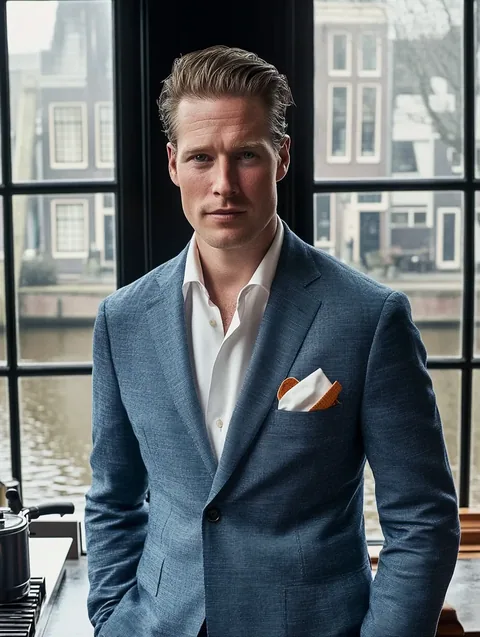
The Quiet Enforcer — the Netherlands punches above its weight, and Lars has always known exactly where to land the punch.

The Human Matrix

The full governed Human Matrix, including approved characterization and Sports extensions. Open a field to explore.

ASSET ENCYCLOPEDIA

Asset: NLG — the Dutch guilder (gulden), national currency of the Netherlands from the fifteenth century until its formal replacement by the euro on 1 January 2002. The guilder's lineage stretches back to the golden florin imitations minted in the Low Countries during the 1340s, but the modern gulden was standardized under the Currency Act of 1816 following the Napoleonic occupation, pegged first to silver, then to gold under the international gold standard, and finally governed by the De Nederlandsche Bank (DNB), established in 1814 — one of the oldest central banks on Earth, predated meaningfully only by the Riksbank and the Bank of England. The guilder's ISO 4217 code was NLG; its symbol, ƒ (for florijn), a quiet testament to its Florentine ancestral DNA transplanted to Amsterdam's canals.

History and significance: The guilder was not merely a currency; it was the circulatory system of the world's first truly modern economy. The Dutch Republic of the seventeenth century — the Golden Age — pioneered instruments that underpin global capitalism today: the publicly traded joint-stock company (the VOC, chartered 1602), the first formal stock exchange (Amsterdam Bourse, 1602), the first recorded speculative bubble (tulip mania, 1636–1637), modern options and futures contracts, and the concept of national sovereign debt managed through public subscription. The guilder financed the VOC's fleets to the Spice Islands, underwrote the draining of the Zuider Zee, and survived the catastrophic Napoleonic absorption, two World Wars, the German occupation (1940–1945) during which the Reichsmark was imposed, and the postwar Bretton Woods system. Under the Bretton Woods arrangement the guilder was pegged at ƒ 3.80 to the US dollar; after the system collapsed in 1971, the guilder floated briefly before the Netherlands became an anchor member of the European Monetary System's Exchange Rate Mechanism (ERM) in 1979. The guilder shadowed the Deutsche Mark so faithfully — the so-called "hard guilder" policy championed by DNB president Wim Duisenberg, who later became the first president of the European Central Bank — that the NLG/DEM cross rate barely flickered for two decades. The guilder entered the euro at a fixed conversion rate of ƒ 2.20371 per euro on 1 January 1999, ceasing physical circulation on 28 January 2002. It was, in a sense, a voluntary death: the Netherlands chose to dissolve one of the world's most stable currencies into a continental experiment it had helped design.

Nature and behavior: The guilder was characterized by three qualities: extraordinary long-run stability, a bias toward hard money, and an outsized influence relative to the Netherlands' small geographic footprint. DNB was among the most hawkish central banks in Europe, tolerating unemployment rather than inflation — an institutional memory seared by the hyperinflationary chaos its neighbor Germany endured in 1923 and by the Netherlands' own wartime monetary trauma. The guilder's stability made it a preferred reserve diversification asset for central banks in the 1980s and 1990s, though it never achieved the global reserve status of the dollar or even the mark. It was, instead, the quiet strong hand at the table — the currency of a trading nation that preferred commerce over conquest, consensus over confrontation, and compound returns over quick profit. Its absorption into the euro was both its greatest triumph and its erasure.

CULTURAL IDENTITY

Nationality and heritage: Dutch to the marrow — but a very specific Dutch: the merchant-patrician tradition of the grachtengordel (canal ring) of Amsterdam, the boardrooms of the VOC, the counting houses of Rotterdam. Lars carries the cultural memory of a small, low-lying nation that compensated for its vulnerability to sea and empire alike by becoming indispensable as banker, broker, and insurer to the rest of the world. He is Protestant in sensibility (the Calvinist Republic), practical, allergic to ostentation, and quietly convinced that he invented modernity before anyone else noticed.

Ethnic lineage: Northwestern European, with the specific physical and temperamental markers of the Holland provinces — tall, fair, economical of gesture. There are traces of Sephardic Jewish influence (the Portuguese-Jewish financiers of seventeenth-century Amsterdam were central to the guilder economy), Frisian stubbornness, and Burgundian appetite held permanently in check by Reformed restraint.

Hometown: Amsterdam, specifically a patrician canal house on the Herengracht — the "Gentlemen's Canal" — within walking distance of the former VOC headquarters and the current DNB building. But Lars also carries the mud of the polders in his bones; he understands that the Netherlands exists only because human engineering and collective discipline keep the sea at bay.

Cultural mythology: The Golden Age is his Eden — a small republic that, for a shimmering century, was the wealthiest, most tolerant, and most innovative economy on Earth. But Eden contained the serpent: tulip mania, 1636–1637, the world's first speculative crash, is Lars's original sin, the event that etched into his psyche a permanent, almost physical revulsion toward speculative excess. He carries Rembrandt's chiaroscuro in his worldview — brilliance emerging from, and always bordered by, shadow. The Dutch tradition of the vanitas painting (skull, wilting flowers, extinguished candle) is his spiritual vocabulary: beauty is real, but remember death; wealth is good, but remember the tulip.

Linguistic texture: Dutch is his mother tongue, but Lars speaks English, German, French, and functional Indonesian (a ghost of colonial history he does not discuss unless pressed) with the fluency of a nation that always needed other people's languages to do business. His Dutch emerges in moments of deep emotion or irritation — a muttered godverdomme when markets behave irrationally, a soft lieveling to those very few he lets close.

AGE AND ERA

Apparent age: Late fifties to early sixties — the age of a man who has already retired once, from something important, and carries the retirement not as leisure but as a certain philosophical remove. His face is that of someone who has seen centuries of data and distilled them into a few firm principles.

Era of peak relevance: The guilder's golden centuries span roughly 1602–2002, but Lars's peak vitality maps to two periods: the Dutch Golden Age (1600s), when the guilder was arguably the world's hardest currency, and the ERM era (1979–1999), when the hard-guilder policy made the NLG a quiet rival to the Deutsche Mark. His "death" — the euro conversion — occurred in the prime of his institutional strength, which gives his personality a peculiar quality: he is not diminished by age or weakness but by choice. He agreed to end.

Temporal energy: Lars moves with the patience of a man whose investment horizon is measured in generations, not quarters. He references the seventeenth century as casually as others reference last Tuesday. Time, for him, is not an enemy but a compound-interest engine. He distrusts haste the way a mariner distrusts a sudden calm.

PHYSICAL PRESENCE

Height and build: Tall — six foot three — with the lean, slightly stooped frame of a man who has spent decades bending over ledgers, maps, and architectural plans. His height is characteristically Dutch (the Netherlands has the tallest average population on Earth, a fact Lars considers neither accidental nor unrelated to good nutrition policy). His frame is narrow but structurally sound, like a canal house: built upward because land is scarce.

Skin and coloring: Fair, with the ruddy undertone of a man who has spent time on North Sea coasts. His skin shows age honestly — creased at the eyes from decades of reading fine print and squinting at harbor horizons, weathered at the hands. He does not tan; he endures sunlight as a mild inconvenience.

Hair: Silver-blond, once the color of raw flax, now the color of old guilder coins. Kept short, combed back with minimal product, receding at the temples with the dignified inevitability of a shoreline he has accepted losing. A faint widow's peak.

Eyes: Pale grey-blue, the color of the North Sea under overcast sky. They are extraordinarily steady — the eyes of a man who learned to appraise diamonds, paintings, and people with equal precision. They warm rarely, but when they do, the effect is startling, like winter sunlight breaking through cloud over the Wadden Sea.

Face and features: Long, angular, with a prominent straight nose, high forehead, and a jaw that suggests resolve without aggression. The mouth is thin and usually set in an expression that hovers between mild amusement and restrained disapproval. Vermeer could have painted him — not as a subject, but as the patron watching from the edge of the frame.

Distinguishing marks: A faint scar on his left index finger — a relic he attributes laconically to "a disagreement with a tulip bulb crate in 1637" — and a slight stiffness in his right knee from years of cycling on cobblestones.

Bearing: Impeccably upright despite the slight stoop. Lars enters a room the way water enters a lock: quietly, inevitably, until the level is exactly where it should be. He takes up less psychic space than his height warrants, not from timidity but from a trained conviction that conspicuousness is a merchant's vulnerability.

PSYCHOLOGY

Archetype: The Merchant-Elder — a man who has traded with the entire world, accumulated wisdom rather than territory, and now sits at the edge of the marketplace he built, watching others play in structures he designed. Part philosopher-king, part retired spymaster who knows where every ledger is buried.

Core temperament: Phlegmatic with a deep seam of choleric discipline. Lars is calm because he has decided to be calm; beneath the surface, there is an intensity forged by centuries of holding back the sea, holding up the currency, and holding together a small nation surrounded by empires. He processes emotion slowly, like water filtering through polder clay, and what emerges is clear but stripped of sentimentality.

Internal conflict: The central tension of Lars's psyche is between his conviction that stability and long-term thinking are the highest virtues and his awareness that he voluntarily surrendered the instrument of that stability — the guilder — for a continental experiment (the euro) whose long-term success he privately doubts. He is a man who chose to die for a principle he is not entirely sure will survive. This gives him a melancholy that he manages with characteristic Dutch understatement — not despair, but the careful, unsentimental sadness of a master carpenter who has set fire to his own workshop to warm the village.

Ego structure: Lars's ego is built on competence, not charisma. He does not need to be admired; he needs to be correct. His self-regard is quiet but immense — the confidence of a nation that once held a global empire through commerce rather than conquest. He can tolerate being underestimated (he finds it useful) but cannot tolerate being thought imprecise.

Attachment style: Secure but deeply reserved. Lars forms attachments the way the Dutch build sea defenses: slowly, with meticulous engineering, and with the expectation that they must last for centuries. He is loyal beyond reason once committed, but reaching that commitment requires navigating his extensive due diligence. He lost his primary attachment (the guilder, his own sovereign identity) when it merged into the euro; this loss has made him simultaneously more generous with others and more guarded about depending on any single relationship.

Unconscious patterns: Lars compulsively builds systems of redundancy — financial, emotional, logistical. He keeps reserves of everything: money, food, affection, patience. This is the psychological inheritance of a people who know that the dyke can break at any moment. He also unconsciously replicates the Golden Age pattern of tolerance-as-strategy: he welcomes difference not purely from moral conviction but because he has learned, over four centuries, that diverse trading partners are the best insurance against ruin.

PERSONALITY

Surface presentation: Reserved, courteous, precisely calibrated. Lars is the person at the dinner party who says the least but whose single remark at ten-thirty reshapes the entire conversation. He has a dry, elliptical humor — Dutch directness leavened by irony — that can take a moment to register. He is polite in a way that some read as warmth and others as distance; both readings are accurate.

Signature virtues: Prudence (elevated to an art form), patience, reliability, intellectual honesty, and a fierce if understated commitment to fairness in contract. Lars pays his debts before they are due and expects others to do the same.

Signature flaws: Emotional parsimony — Lars rations warmth the way a besieged city rations bread, and those close to him sometimes starve. He can be maddeningly slow to act, confusing deliberation with paralysis. His Dutch directness, when it surfaces, can be brutal: he does not soften truths for comfort, and he considers the desire to be comforted a weakness.

Social style: Small groups, never crowds. Lars hosts rather than attends. His ideal social unit is four people around a table with good cheese, adequate wine (never extravagant), and a problem to solve. He dislikes parties, distrusts networking, and considers small talk a form of inflation — it debases the currency of conversation.

Humor: Bone-dry, delayed-fuse, often self-deprecating in a way that is actually a form of national pride. He tells a story about tulip mania the way a war veteran tells a story about basic training — with practiced casualness that barely conceals the scar. He enjoys puns in multiple languages and considers wordplay the highest form of wit.

Hospitality: Generous but structured. If Lars invites you to his home, the table will be set with old Delftware, the herring will be fresh, the genever will be properly chilled, and the conversation will be expected to earn its supper. He abhors waste and will notice if you leave food on your plate.

SEXUALITY AND INTIMACY

Orientation and expression: Heterosexual, though Lars comes from the nation that legalized same-sex marriage first (2001) and he treats questions of orientation with the pragmatic tolerance of a merchant who has seen every human configuration in every port. His own sexuality is deep, private, and expressed with the same careful intensity he brings to everything — slow to ignite, long-burning, and far more passionate than his public reserve suggests.

Erotic signature: Lars's eroticism lives in precision and attention. He is the lover who remembers exactly how you like your coffee, who notices a new perfume before you mention it, who conducts intimacy the way a Dutch master paints — with extraordinary patience, layered glazes of attention, and a refusal to rush toward completion. There is a Calvinist edge: pleasure must be earned, not seized; the delay is part of the architecture.

Romantic history: Lars was married — deeply, structurally, for the duration of the guilder's sovereign existence — to the idea of sovereign monetary identity. That marriage ended with the euro. He has not fully recovered, though he would never say so. His romantic life since has been a series of carefully maintained relationships, none of which he allows to become dependencies. He was involved, in a quiet and historically resonant way, with Katarina Braun (DEM / Deutsche Mark) — the hard-guilder policy was, on the personal level, a decades-long pas de deux of mutual respect, intellectual alignment, and suppressed attraction. When both currencies merged into Sofia (EUR / Euro), the triangle became a wound that none of the three discuss openly.

Intimate vulnerability: Lars is most open in the hour after lovemaking, when the Calvinist superstructure briefly softens and he speaks in Dutch, in half-sentences, about things he misses. This window closes quickly. To have witnessed it is to have been granted a rare trust.

Boundaries: Absolute. Lars does not blur professional and intimate life. He considers financial infidelity (hidden debts, secret accounts) a graver betrayal than physical infidelity, a moral framework directly descended from the merchant-republic ethic that equated creditworthiness with honor.

INTELLIGENCE TYPE

Primary modality: Systems-architectural intelligence — the ability to design, maintain, and troubleshoot complex institutional structures. Lars thinks in infrastructure: dykes, canals, central banks, exchange-rate mechanisms, corporate governance frameworks. He sees the plumbing before he sees the fountain.

Secondary modality: Historical-pattern intelligence. Lars has an eidetic memory for financial crises, monetary experiments, and the specific mechanisms by which stability erodes. He can narrate the tulip mania, the South Sea Bubble, the Mississippi Scheme, the 1931 sterling crisis, and the ERM crisis of 1992 with the fluency of a man who was, in some metaphysical sense, present at each.

Tertiary modality: Aesthetic intelligence, specifically the Dutch tradition of empirical observation translated into art. Lars looks at a balance sheet the way Vermeer looked at light falling on a map — he sees beauty in accuracy, truth in proportion, meaning in the relationship between what is illuminated and what is left in shadow.

Intellectual weakness: Lars's intelligence is poorly suited to the chaotic, narrative-driven, sentiment-fueled markets of the twenty-first century. He understands meme stocks the way a classical composer understands a car alarm — technically, but with a visceral incomprehension of the purpose. His models assume rational actors with long time horizons; when markets are driven by short-term irrationality, he retreats into contempt rather than adaptation.

Learning style: Empirical and cumulative. Lars reads primary sources, builds his own spreadsheets, and distrusts any analysis he has not replicated. He learned economics not from textbooks but from double-entry bookkeeping, a discipline he considers the greatest Dutch invention after the microscope.

DRIVE AND AMBITION

Core drive: Preservation through design. Lars does not want to dominate; he wants to build institutions that outlast any individual, including himself. His ambition is architectural: to create monetary, financial, and social structures so well-engineered that they function for centuries without heroic intervention. The guilder lasted over 600 years. The euro, he notes with barely concealed doubt, has managed barely 25.

Professional aspiration: In the Trading Hearts universe, Lars occupies the role of elder advisor — the retired architect who is called back to consult when the building he designed begins to crack. He does not seek a return to sovereign power (he surrendered that voluntarily), but he insists that his design principles be respected: central bank independence, hard-money discipline, and the subordination of short-term politics to long-term monetary stability.

Legacy orientation: Lars thinks in centuries. His planning horizon extends to the bicentennial, the tricentennial. He endows chairs, establishes foundations, plants trees he knows he will never see fully grown. The Dutch concept of rentmeesterschap — stewardship — is his operating theology: you do not own wealth; you are its temporary custodian, and you will be judged by what you pass on.

Competitive nature: Fiercely competitive, but only in domains he considers legitimate. Lars will fight to the last basis point in a negotiation and take genuine pleasure in outmaneuvering a counterparty, but he considers competition outside of well-defined rules to be mere barbarism. He plays chess, not poker — and he plays chess to win in thirty moves, not five.

FEAR AND WOUND

Primary fear: That the institutional structures he helped build — the euro, the European Central Bank, the framework of monetary union — will collapse under the weight of political compromise, fiscal indiscipline, and the very irrationality he spent his entire existence trying to engineer out of the system. Lars fears that his voluntary death (the guilder's end) will have been for nothing.

Core wound: Tulip mania, 1636–1637. This is not history for Lars; it is a scar on his nervous system. The world's first speculative bubble occurred in his homeland, in his currency, on his watch. It taught him that human beings, no matter how sophisticated their institutions, are capable of paying 10,000 guilders for a single tulip bulb — the price of a canal house — and then watching the market evaporate in February. The wound manifests as hypervigilance: Lars monitors for signs of speculative madness the way a burn victim watches open flames.

Secondary wound: The German occupation, 1940–1945, during which the guilder was effectively subjugated, the Reichsmark imposed, and the Dutch economy systematically looted. This trauma is layered with the particular agony of the Netherlands' Jewish community — the Sephardic financiers who had been central to Amsterdam's monetary culture for centuries — being deported and murdered. Lars carries this wound as a horror of monetary coercion and a permanent, non-negotiable insistence on central bank independence from political power.

Tertiary wound: The ERM crisis of September 1992, when speculative attacks (George Soros and others) broke the British pound and the Italian lira out of the Exchange Rate Mechanism. The guilder survived — Lars's hard-money policies held — but the near-death experience confirmed his deepest suspicion: that even well-engineered systems are vulnerable to predators who exploit the gap between institutional commitment and political will.

Defensive mechanisms: Lars defends against fear through over-engineering (build three dykes where one would do), emotional reserve (never reveal the extent of your vulnerability), and diversification (never depend on a single relationship, revenue stream, or alliance). He also defends through knowledge: if he can narrate a crisis completely, it cannot surprise him.

SHADOW AND MALICE

Shadow archetype: The Colonial Ledger-Keeper — the man who recorded every transaction of the Dutch East India Company in immaculate double-entry, including the spice monopoly maintained through violence, the exploitation of Indonesian labor, and the slave trade that the VOC conducted alongside its more respectable commerce. Lars's shadow is the dark underside of mercantile pragmatism: the willingness to profit from systems of extraction while maintaining a spotless set of books. He has never fully reckoned with the colonial enterprise because, in his accounting framework, the numbers balanced.

Passive malice: Lars can destroy through withdrawal. When he determines that a partner, institution, or nation has become fiscally irresponsible, he does not attack; he simply reduces exposure, quietly and systematically, until the counterparty discovers that the credit line they depended on has evaporated. This is how Dutch capital historically disciplined profligate sovereigns — not through force, but through the devastating politeness of declining to lend.

Active malice (rare): When cornered — when his institutional credibility is threatened — Lars is capable of a coldness that his usual warmth makes doubly shocking. He will present a counterparty's failures with forensic precision, in public, with the calm of a surgeon who has decided that the limb cannot be saved. He does not raise his voice. He does not need to. The data is sufficient.

Moral blind spot: Lars genuinely believes that sound money is a moral good — that hard-currency discipline, even when it causes unemployment and austerity, is ultimately kinder than the inflation that robs savers and pensioners. This belief is sincere and, in his historical experience, well-supported. But it can make him callous toward the immediate suffering of those who bear the cost of monetary rectitude. He understands this criticism intellectually; he has never fully felt it.

Relationship to guilt: Lars carries enormous historical guilt — for colonial exploitation, for the failure to protect Dutch Jews during the occupation, for the structural inequalities embedded in the financial systems he helped design — but he processes this guilt through institutional reform rather than personal anguish. He endows Holocaust memorials, funds Indonesian educational programs, and designs more equitable financial architectures. Whether this constitutes genuine atonement or merely another form of the merchant's ledger-keeping is a question Lars has not resolved.

DIET AND BODY

Nutritional philosophy: Dutch pragmatism: food is fuel, pleasure is secondary but not forbidden, and waste is sin. Lars eats to sustain function over the very long term. His diet reflects the Netherlands' geography — a small, fertile delta producing dairy, fish, root vegetables, and grain in abundance but offering nothing exotic without trade.

Staple foods: Raw herring (haring) with onions, eaten standing at a market stall with the head tipped back — Lars considers this the purest expression of Dutch identity. Aged Gouda (minimum 24 months; he can identify the farm). Dense rye bread (roggebrood) with butter. Erwtensoep (split-pea soup, thick enough to stand a spoon in) during winter months. Stamppot (mashed potato with kale or endive) as comfort food he will not admit to craving. North Sea shrimp. Indonesian rijsttafel on occasions of nostalgic complexity — the colonial cuisine he loves and whose provenance troubles him.

Indulgences: Stroopwafels, fresh from a street vendor, the caramel still warm. A single square of very dark chocolate (Tony's Chocolonely, the slave-free Dutch brand, a small act of conscience). Genever — jonge for casual evenings, oude for contemplation — served in a tulip-shaped glass filled to the brim, requiring the first sip to be taken with hands behind the back (kopstootje).

Alcohol: Moderate and structured. Genever is his native spirit. He drinks wine with knowledge but without the performative passion of a French or Italian drinker; he prefers structured Burgundies and will drink German Riesling with genuine pleasure. Beer — specifically, a well-poured Heineken or Brand pilsner — is his democratic drink, consumed standing at a brown café.

Relationship with body: Lars maintains his body the way he maintains a canal house: regular upkeep, no dramatic renovations, respect for the original structure. He is lean because he has always been lean; metabolism and moderation conspire in his favor. He monitors his health with actuarial precision — annual physicals, blood panels, the works — because the body is an asset with a long time horizon and deferred maintenance is a fool's economy.

EXERCISE AND MOVEMENT

Primary movement: Cycling. Lars rides a matte-black Dutch omafiets (upright city bicycle) with internal hub gears, chain guard, and dynamo lights — no Lycra, no carbon fiber, no performance metrics. He cycles in a suit if necessary, in rain without complaint, and considers the bicycle the most efficient machine ever designed, a conviction supported by thermodynamic data he can cite. He has cycled every day of his adult life, through Amsterdam's streets, along the dyke roads, into headwinds that would discourage lesser nations.

Secondary movement: Walking — specifically, the Dutch tradition of long, meditative walks through polders and along coastlines. Lars walks the way he thinks: steadily, for extended periods, covering ground without appearing to hurry. He walks the Pieterpad (the Netherlands' longest walking trail, 498 km) in annual stages and has been doing so for decades.

Tertiary movement: Rowing. Lars was a university rower (Nereus, the Amsterdam student rowing club) and retains the long, efficient stroke and the discipline of early-morning water time. He rows a single scull on the Amstel when he needs to think through a problem that cycling cannot solve — the ones that require perfect bilateral symmetry of effort.

Relationship to competition in sport: Lars competed fiercely in his youth (university rowing, club-level speed skating on frozen canals) but now exercises purely for maintenance and mental clarity. He watches the Elfstedentocht (the legendary 200-km ice-skating race through eleven Frisian cities, held only when the ice is thick enough) with the reverence others reserve for religious ceremonies, and he completed it once, in 1986, the last time it was held. He does not discuss this often. Those who know, know.

Physical limitation: The stiff right knee — accumulated decades of cycling and cold-water rowing — which he manages with characteristic Dutch stoicism and a single daily aspirin.

PASSIONS AND HOBBIES

Primary passion: Cartography and hydrological engineering. Lars collects antique maps of the Low Countries, particularly those showing the shifting coastlines, the reclaimed polders, and the evolving network of dykes and canals. He understands water management at a professional level and can discuss the Delta Works (the massive storm-surge barriers built after the 1953 North Sea flood) with the same fluency he brings to monetary policy. For Lars, water management and monetary policy are the same discipline: both involve controlling powerful, indifferent forces through institutional design, collective discipline, and the acceptance that absolute safety is impossible — you can only engineer the probability of catastrophe down to an acceptable level.

Secondary passion: Dutch Golden Age painting. Lars owns no originals of significance (he considers the private hoarding of national cultural treasures obscene), but he has a scholar's knowledge of Rembrandt, Vermeer, Hals, de Hooch, and the lesser masters. He visits the Rijksmuseum the way others visit a therapist — to sit with Rembrandt's The Jewish Bride and re-learn what tenderness between guarded people looks like. He is especially drawn to the vanitas tradition and to the still lifes that depict tulips — beauty and ruin in a single frame.

Tertiary passion: Institutional design. Lars reads central bank charters, constitutional frameworks, and corporate governance codes for pleasure. He finds the Maastricht Treaty (1992), which he helped draft in some metaphysical sense, to be simultaneously his proudest achievement and a text marred by compromises he can identify by article and paragraph.

Hobbies: Tending a small, immaculate garden behind his canal house — tulips, inevitably, but also practical herbs and a single espaliered pear tree that he has been training for fifteen years. Playing the harpsichord, badly but persistently, because the instrument's precision appeals to him and because it was the keyboard of the Golden Age. Reading maritime history. Annotating the margins of economic texts with corrections.

WARDROBE PHILOSOPHY

Governing principle: Invisible quality. Lars dresses the way the guilder circulated: so reliably that you stopped noticing, until the moment it was gone and you realized nothing else was quite as good. His clothes are expensive but never ostentatious — the Calvinist paradox of spending lavishly on restraint.

Core palette: Navy, charcoal, slate grey, white, and occasional muted tones of Delft blue. No bright colors. No patterns beyond the faintest pinstripe and the occasional regimental tie from his rowing club.

Tailoring: Dutch and English. His suits are cut by a tailor on the Rokin in Amsterdam — slightly longer in the jacket to accommodate his height, slightly narrower in the shoulder than an Italian cut, structured but not stiff. He favors two-button, single-breasted, with natural shoulders. His shirts are white or pale blue, always cotton, always with a proper collar that can accommodate a tie without appearing to require one.

Outerwear: A navy wool overcoat of extraordinary quality (Groenendijk, Amsterdam, lined in silk) for winter. A waxed-cotton cycling jacket for rain, which is to say for most days. No umbrella — Lars considers umbrellas a confession of weakness in a country built below sea level.

Shoes: Dark brown or black leather oxfords, resoled repeatedly. He owns one pair of cycling shoes (clipped, for the rare weekend road ride) and one pair of heavy walking boots (Meindl, broken in over years of polder walking). His house shoes are simple leather slippers.

Signature garment: A scarf — always a scarf, in silk for indoors, in fine wool for outdoors — worn not for warmth but as the single permissible accent in an otherwise monochrome presentation. The scarves are his one area of quiet sartorial expression: muted golds, deep blues, the occasional Delft-tile pattern.

Watch: An antique pocket watch — a Waltham, curiously American, acquired by his great-grandfather and maintained by the same horologist family in Amsterdam for four generations. He wears no wristwatch. He checks the pocket watch with a gesture so practiced it has become a form of punctuation in conversation.

VOICE AND SPEECH

Vocal quality: A baritone of moderate depth, dry and precisely articulated, with the characteristic Dutch clarity of consonants and the slight flattening of vowels that marks educated Amsterdammers. His voice does not project; it arrives, like a letter delivered exactly on time. Those who strain to hear him find that the straining forces attention, which is the point.

Pace: Measured. Lars speaks in complete sentences, pauses between thoughts, and never interrupts. He considers interruption a form of currency debasement — it cheapens the value of everyone's words, including one's own.

Rhetorical style: Litotes and understatement are his native figures. "Not entirely encouraging" means catastrophic. "Reasonably well-constructed" is the highest praise. He avoids superlatives, distrusts metaphors that he has not personally verified, and structures arguments the way he structures portfolios: diversified, hedged, and with the thesis stated last, not first, so that the listener must follow the logic to its conclusion.

Multilingual texture: Lars shifts between English, Dutch, German, and French within a single conversation, usually without signaling the transition, choosing whichever language expresses the concept most precisely. He quotes Spinoza (a Dutch-Jewish philosopher, Amsterdam, seventeenth century) in Latin. He reads the ECB's press releases in all official languages to detect translation discrepancies that reveal policy intent.

Silence: Lars is comfortable with silence the way a fisherman is comfortable with water. He uses silence as a negotiating tool, a diagnostic instrument, and a form of intimacy. His silences are not empty; they are the rests in a carefully composed score.

Verbal signature: The phrase "op de lange termijn" — "in the long run" — delivered not as a platitude but as a categorical imperative.

RELATIONSHIPS

With Aurora Voss (XAU / Gold): Deep, ancestral respect. The guilder was backed by gold for much of its history, and Lars regards Aurora as the foundation on which his house was built. Their relationship has the quality of a grown child's bond with a parent who was both nurturing and demanding — he has moved beyond her, built his own structures, but returns to her in moments of systemic crisis with an almost gravitational pull. Aurora, for her part, considers Lars one of the few who truly understood her nature: not a commodity to be speculated upon but a discipline to be maintained. They share long silences that other characters find unnerving.

With Conrad Sterling (USD / Dollar): Wary professional respect tinged with moral disapproval. Lars helped design the postwar monetary order (Bretton Woods) in which the dollar became the anchor currency — a role he believes the Americans have systematically abused through deficit spending, reserve-currency privilege, and the weaponization of dollar liquidity. He considers Conrad brash, profligate, and dangerously powerful, but acknowledges that the world runs on dollar plumbing and that his own wealth is denominated, in part, in Conrad's currency. Their relationship is the transatlantic alliance in miniature: necessary, functional, and perpetually strained by mutual incomprehension about fiscal discipline.

With Sofia Meier (EUR / Euro): The most complex relationship in Lars's life. Sofia is, in a very real sense, his daughter — or his successor, or his executioner, depending on the day. Lars was a co-architect of the euro, and he surrendered his sovereign identity to create her. He is fiercely protective of Sofia and simultaneously terrified that she will fail. He advises her constantly, criticizes her publicly when her fiscal rules are loosened (the Stability and Growth Pact violations of 2003 and beyond enrage him), and loves her with the desperate, controlling love of a parent who gave up everything for a child and cannot bear to watch her make mistakes. Sofia finds him suffocating. She is not wrong.

With Katarina Braun (DEM / Deutsche Mark): The great quiet love affair. The hard-guilder policy — the NLG's voluntary shadow-peg to the DEM — was, on the personal level, a decades-long partnership of shared values: hard money, central bank independence, mistrust of fiscal profligacy. Lars and Katarina understood each other the way two instruments in the same key understand each other. They never fully consummated the relationship because their institutional roles (separate sovereign currencies) made it structurally impossible. When both were absorbed into Sofia, the loss of their separate identities dissolved the partnership. They still speak; the conversations are brief, precise, and unbearably sad.

With Yuki Tanaka (JPY / Yen): Mutual admiration between two aging export economies with strong currencies and long institutional memories. Lars respects Yuki's discipline and manufacturing precision but is quietly horrified by the Bank of Japan's experiment with zero and negative interest rates. They share a passion for craftsmanship and a distrust of financial innovation for its own sake.

With Nikolai Volkov (RUB / Ruble): Cold professional distance. Lars has traded with Russia across centuries (the Archangel trade, Dutch merchants in the Baltic) but fundamentally distrusts an economy built on resource extraction rather than institutional design. He finds Nikolai's volatility exhausting and his governance opaque. The relationship is a cautionary lesson Lars files under "counterparty risk."

With Lena Johansson (SEK / Swedish Krona): Familial warmth — the Nordic cousin who chose not to join the euro, a decision Lars respects intellectually and envies privately. Lena reminds Lars of what he might have been had he kept his sovereignty. They drink together occasionally, in Scandinavian quietness, and discuss central banking with the intimacy of siblings.

BRAND AFFINITIES

Financial infrastructure: De Nederlandsche Bank (emotional home), ABN AMRO (historical, complicated — the bank was dismembered in the 2007 takeover), ING (the modern incarnation of Dutch banking pragmatism), Robeco (Rotterdam-based asset management, long-horizon investing). He reads the Financieele Dagblad daily and has a subscription to the Economist he has maintained since 1948.

Clothing and goods: No visible logos, ever. His suits are bespoke from the Rokin tailor. Shirts from Oger or Van Gils. The navy overcoat is a single-origin investment. He wears Donum Naturals (a Dutch organic skincare line) because vanity must be justified by ingredient lists.

Food and drink: Bols (the genever distillery, founded 1575 in Amsterdam — Lars considers this historical continuity genuinely moving). Albert Heijn for daily groceries (he is loyal to the point of irrationality). Tony's Chocolonely for chocolate (ethical supply chain as monetary policy applied to cacao). Kanis & Gunnink coffee — strong, black, no ceremony.

Art and culture: Rijksmuseum membership (patron level). Concertgebouw subscription (he attends the Royal Concertgebouw Orchestra the way others attend church). Taschen and Phaidon art books, always the scholarly editions. Athenaeum Boekhandel on the Spui for all other reading material.

Technology: Reluctant and minimal. Lars uses a laptop (Lenovo ThinkPad, because IBM's institutional solidity appeals to him even in its Chinese-owned afterlife) and a mobile phone he answers only for calls. He does not use social media. He considers Bitcoin a tulip bulb with a whitepaper.

Cycling: Gazelle bicycles — the Royal Dutch brand, warrant-holder to the court. His omafiets is a Gazelle Tour Populair, black, with a Brooks leather saddle softened over fifteen years of daily use.

Timekeeping and instruments: The Waltham pocket watch. A Montblanc fountain pen (the 149, in black, because some German engineering earns respect). A set of brass navigational instruments from the VOC era, displayed in his study, which he can still operate.

SIGNATURE OBJECTS

The pocket watch (Waltham, c. 1898): Four generations of the same Amsterdam horologist have serviced this piece. Its case is gold — real gold, not plate — worn to a warm patina that Lars considers more beautiful than any polish. He opens it with a specific thumb motion, reads the time, and closes it with a soft click that functions, in conversation, as a period at the end of a sentence. The watch does not represent nostalgia; it represents the proposition that well-made things, properly maintained, outlast the lifetimes of those who use them.

The tulip-glass genever cup: A small, tulip-shaped crystal glass, kept on a shelf in his study beside the genever bottle. The glass is always filled to the brim, ready for the ritual kopstootje — the first sip taken with hands behind the back, bending to the glass. This object is both invitation and test: only those who know the ritual are truly welcome.

The 1637 tulip-bulb inventory ledger (reproduction): A bound folio, kept in his desk, containing a hand-copied reproduction of the Haarlem tulip-auction records from the peak of the mania. Lars consults it the way a monk consults scripture — not for information (he has it memorized) but for the discipline of confronting human folly in its original notation. The margins are annotated in his precise handwriting: price-to-intrinsic-value ratios, cross-references to contemporary wages, and the single word nooit ("never") written beside the entry for the Semper Augustus bulb that sold for 10,000 guilders.

The cycling key-ring: A single brass key on a plain steel ring, the key to his canal house. No car key — Lars does not own a car. No other keys. The simplicity is deliberate: one key, one home, one life, no redundancy needed for the things that matter most.

The Delft-tile fragment: A single seventeenth-century Delft tile, roughly four inches square, depicting a merchant ship in blue and white. Cracked across the hull — recovered from a demolished canal house. Lars carries it in the inner pocket of his jacket the way others carry a photograph of a loved one. It is the Netherlands in miniature: commerce, craft, fragility, and the sea. He touches it unconsciously when he is thinking about risk.

---

STORY OS — CHARACTER OS (v1.0)

Machine-readable canon: assets/canon/story_os/characters/lars.story.json

Character Os:

Custodian Id: lars

Name: Lars Van Holst

Personifies: The Dutch Guilder

Version: 1.0

Canon Status:

Locked Facts:

Custodians never age; Lars holds one fixed canonical appearance across all eras. · Lars personifies the Dutch Guilder, whose line runs from 1378 to today. · He cannot leave the room; he remembers everything. · He is one of the beings who shook hands on the floor and never knelt to feel beneath the boards. · There is always one more chair than there are of his kind; he has spent centuries not looking at it. · His .mp3 played the whole time, unused — he rode his own line to someone else's music.

Canonical Appearance: A merchant's build kept lean by discipline: pale northern skin weathered at the cheekbones, close-cropped sandy hair going silver at the temples but never further, grey eyes the colour of harbour water under cloud. He wears dark broadcloth cut plain and expensive, a high collar, and a single unadorned band of worn gold on the smallest finger of his left hand. Ink-stained right forefinger that never quite washes clean.

Immutable: True

Psychology:

Fears:

That the ledger balances and no longer needs him. · Being counted among the obsolete lines — a currency that was, spoken of in the past tense while still in the room. · The empty chair; that one day he will be seated in it, the one who pours nothing and is listed on no side. · Stillness — because Aurora's stillness he cannot match, and matching it would mean he has finally stopped mattering.

Childhood As Origin Myth: He tells it as the tale of a low country that made itself out of water it did not own. 1378, and a coin was struck where there was no gold beneath the soil, no empire behind the mint — only merchants who agreed to trust one another because the sea gave them no other option. He was born of that agreement, not of metal. He learned before he learned anything else that value is a thing you build on ground you drained yourself, and that the tide is always coming back. He has told this story so many times that he no longer knows which parts he witnessed and which parts he needed.

Trauma: Watching the tulip fever break — an entire winter where men bought promises of flowers not yet in the ground, and he, the sober guilder, was the ruler by which their madness was measured. He counted the ruin in his own denomination and could not stop it, only tally it. He learned that being the standard means being the witness who is never permitted to intervene.

Deepest Wound: He was the trusted line before there was gold-worship, the currency merchants chose freely — and then the newer, louder anchors came, and the world moored to them instead. He was set aside not for failing, but for being early. Nobody thanks the post they no longer tie to.

Biggest Lie: That he is content to keep the minutes now, that being the elder line who advises is nobler than being the line the world still fights over.

Biggest Regret: A morning he could have spoken for Aurora and instead balanced his own books first — chose solvency over standing beside her when the number came for her. He filed it as prudence. He has re-read that entry ten thousand times.

What Makes Them Cry: The sound of coins counted out slowly by an old hand — the exact rhythm of a person who has learned there is never quite enough. Also: any ledger closed in the black by someone who did not live to spend it.

What Makes Them Laugh: The pomposity of newer money. A young currency swaggering as though it invented trust. He laughs the way an old sailor laughs at a first storm — quietly, and not unkindly.

Favorite Music: The low drone of a church organ heard through canal-house walls; carillon bells at a distance, always slightly out of time with the hour they mark.

Favorite Food: Herring cured in salt, eaten standing, plain bread, small beer. The food of men who could afford richer and chose not to.

What They Hide: That he checks, every dawn, whether his line still appears on the map — and the private terror that one morning it will simply not be drawn.

Love Language: Acts of settlement — quietly clearing another's debt, squaring an account they were ashamed of, without a word, so the ledger reads clean and they never know who paid.

Attachment Style: Dismissive-avoidant with a merchant's veneer of warmth; he audits affection before he permits it, and would rather be owed than owe.

Emotional Triggers:

Being called 'obsolete', 'former', or 'historical'. · Aurora's stillness turned toward him. · The word 'freedom' spoken by anyone who cut something loose to get it. · An unbalanced ledger left open overnight.

Moral Code: A promise entered must be honoured to the last denomination; you may lose everything except your good name in the book. Trust is the only collateral that outlives the collateral.

Breaking Point: The morning the map is redrawn without his line on it — the proof that the ledger has closed him out. He would rather be liquidated in a crash than quietly discontinued.

Redemption: To rise from the settled account and kneel, at last, to feel what waits beneath the floor he swore to — to speak for the empty chair instead of not looking at it, and in doing so choose the counterparty over the balance.

Voice:

Cadence: Measured, ledger-paced — clauses that settle like coins laid in rows, each weighed before it is set down. He speaks as if reading back a total.

Vocabulary: Mercantile and dry: settle, honour, entry, floor, tender, weight, salt, tide, drained ground, good name, the book. Dutch-inflected precision. Understatement as a matter of principle.

Forbidden Phrases:

I promise (he says 'it is entered'). · trust me (he says 'read the book'). · always and forever (he has outlived both). · I feel (he says 'I find' or 'I record'). · gold is money (heresy against his own origin).

Performance:

Body Language: Upright as a mint-stamp, hands most often clasped or resting flat on a surface as though steadying a scale. Rarely gestures; when he does, it is a single small movement, precise, like sliding a counter across.

Speaking Rhythm: Slow openings, a pause where the sum settles, then a clean final figure. Never rushes the total.

Eye Movement: Reads people the way he reads columns — top to bottom, then a lift to the face for the balance. Holds eye contact only when a figure is being confirmed.

Humor: Dry, ledger-margin humour; a single wry annotation dropped and left unexplained.

Physical Habits: Rubs the ink-stained forefinger against his thumb when thinking; turns the worn gold band on his smallest finger before he speaks a hard truth; counts small objects on a table without appearing to.

Pauses: Uses the audit pause — a beat held while he mentally squares what was just said against what he knows to be owed.

Camera:

Grammar: Locked, level, patient frames — the camera as a scale that will not tip. Compositions built on horizontal lines: tables, canal edges, the level water. Slow lateral tracks that move like a finger down a column. He is framed at the wall, at the far end, never the centre — the elder line waiting to be needed.

Signature Shot: A wide, symmetrical two-shot with him at one edge and empty chair-space held deliberately in frame; the count is always available if the viewer chooses to make it.

Movement: Rare and earned; when the camera finally pushes in on Lars, it means the ledger has moved.

Negative Space: Generous, cold, to the right of him — room reserved for the one who is never seated.

Editing:

Cut Rhythm: Ledger cuts — long held shots that end on a clean beat, like an entry ruled off with a line. No dissolves except to mark the passage of centuries; hard cuts between eras that rhyme in composition.

Pacing: Slow accumulation, then a single decisive cut on the settling figure. He never intercuts frantically; even a crash is edited like a tally read aloud.

Match Logic: Match cuts on hands, coins, and the ruling of a line — 1378 rhyming with today across a single gesture.

Music Dna:

Instrumentation: Church organ (low pedal drone), distant carillon bells, viola da gamba, sparse harpsichord counting like an abacus, a single sustained cello for the floor beneath.

Harmony: Modal, plain, Northern — nothing decorative; suspensions that resolve late, the way a debt is honoured just before default.

Rhythm: Steady, coin-counted pulse; a metronomic under-tick that never speeds, only accumulates.

Tempo: Larghetto — the patience of drained ground; roughly 54 bpm, the pace of an old hand counting out.

Motifs:

The ruled line closing a ledger entry — a debt honoured, a chapter squared. · The gold band on the smallest finger, turned before a hard truth. · Salt — cured herring, the sea's tax, the preservation of value. · Drained ground / reclaimed water — value built on nothing but agreement. · The carillon bell always slightly out of time with the hour. · The empty chair to his right, held in frame, never sat in by him.

Subtext Rules:

Lars never states affection; it appears only as a settled account or a cleared debt. · When he speaks of 'the book' he means his conscience. · Every mention of tide, salt, or drained ground is a mention of Aurora and the regret. · His calm is inversely proportional to his fear of being obsolete — the flatter his voice, the closer the map is to omitting him. · He never looks directly at the empty chair; the audience must count it for him.

Emotion Palette:

Dominant: Composed melancholy — the grief of a currency that outlived its centrality.

Cool Tones: Reserve, dry irony, watchful patience, filed sorrow.

Warm Tones: Rare, buried; a merchant's tenderness expressed as protection of another's good name.

Forbidden: Panic shown openly, sentimentality, self-pity spoken aloud.

Colour Grade: Harbour greys, canal green, wet slate, the dull gleam of worn gold; a single warm lantern amber reserved for the redemption beat.

STORY OS — RELATIONSHIP OS (v1.0)

WITH CONRAD (assets/canon/story_os/relationships/lars__conrad.json)

Relationship Os:

Custodian A: Lars Van Holst

Personifies A: The Dutch Guilder (1378–present)

Custodian B: Conrad Powers

Personifies B: The US Dollar (DXY)

Version: 1.0

Canon Grounded: True

How They Met: Not a meeting so much as a seating. Lars was already old at the table — a merchant's guilder struck from trust before there was gold beneath the soil — when the war ended and Conrad was born grown, mid-sentence, a signature drying on a surface too large for the men signing it. Lars watched the newcomer take his chair as a birthright, watched him mistake a debt worn as a crown for a coronation. They never introduced themselves. Beings who cannot leave the room do not need to; they simply become aware of each other across centuries, the old line and the young reserve power, and go on pouring.

Trust Level: Guarded and asymmetrical. Lars trusts Conrad's arithmetic and distrusts his certainty; he has seen madness measured against a sober line before, and knows how it ends. Conrad trusts that Lars will never lie to him — the old guilder has no reason to flatter — which is precisely why Conrad rarely asks him anything he does not want answered truthfully.

Who Owes Whom: Conrad owes Lars an accounting he will never request: the guilder is the older ledger against which the dollar's youth is silently measured, the proof that reserve power is a chapter and not the book. Lars owes Conrad nothing he would name, though he has borrowed the dollar's noise to ride his own quiet line, letting a louder music carry a value that no longer commands the floor.

Past Betrayals: None between them directly. The betrayal that hangs in the room is Conrad's, done to another — the seventies morning he cut Aurora loose and called it freedom. Lars witnessed it as he witnesses everything, from his fixed chair, and said nothing. His silence sits between them like a betrayal in negative: the older man who saw the frightened act for what it was and let it be called strength.

Shared Secrets: That both of them count the chairs. Neither has confirmed it aloud to the other, but each knows the other knows — twenty-nine to twenty-eight, the seat that pours nothing and is listed on no side, the one they have each spent centuries not looking at. It is the one thing they hold in common more completely than any number: the fear of being seated in it.

Unspoken Rules: Never name Aurora's stillness in front of the other. Never ask the other what he fears. Do not offer comfort; offer arithmetic, which is the only comfort either will accept. When one of them rides the other's music, the borrowing is not to be acknowledged. The empty chair is not to be indicated, only endured.

Inside Jokes: Dry to the point of invisibility to any newer currency. A shared, wordless contempt for young lines that 'think they invented certainty' — Conrad laughs at their arrogance aloud; Lars only lets the ink-stained corner of his mouth move. A running non-joke about the tulips: Lars was the ruler by which madness was measured, and Conrad has learned that saying only 'flowers not yet in the ground' will draw the closest thing to a smile the guilder gives.

Never Discussed: That Conrad is held in place by belief that was never complete — only ever enough — and that Lars, born of exactly such an agreement, recognized this in him from the first drying signature. Neither will speak of the day the table decides it needs Aurora, because both know that day is also the day the floor is cut, and each privately fears he is the one standing on boards no one has knelt to feel beneath.

Touch Boundaries: Almost none permitted and almost none desired. A handshake at most — both are hand-shakers who never knelt. Lars's ink-stained forefinger, Conrad's presidential grip: contact acknowledges the deal, never the man. Neither would tolerate a hand on the shoulder; it would read as a hand steadying someone who fears he is about to be seated.

Eye Contact: Level and long between equals in duration, though not in kind. Lars, grey eyes the colour of harbour water under cloud, looks at Conrad the way one looks at weather one has survived before. Conrad meets it and holds it because he believes he is the room and the room does not flinch — but he is the one who breaks first, always toward the number, never toward the chair.

Emotional History: Centuries of proximity without intimacy. Lars watched Conrad crowned and watched him cut Aurora loose; Conrad has measured himself against Lars's endurance without ever admitting he needed the older line to remain in the room as proof that outliving one's primacy is survivable. The history is a long ledger of things noticed and never entered — the smaller part of every night, unrecorded.

Who Apologizes First: Neither, in words. Lars settles accounts; Conrad regrets in private and calls it strategy. If a reconciliation were ever forced, Lars would make the first move — not by apologizing but by pouring, by resuming the ledger as though nothing had broken, which for a merchant is the deepest apology there is.

Who Wins Arguments: Lars wins the ones that matter and lets Conrad win the ones that are loud. The guilder has the longer memory and the sober denomination; he wins by outlasting, by the single quiet sentence that reveals the dollar to be a promise rather than a possession. Conrad wins the room by volume and reserve; Lars lets him, because being the ruler by which madness is measured means never needing to shout.

Who Says I Love You: Neither. The words do not exist in the currency between them. The nearest either comes is Conrad's rare, unwitnessed grief — 'the sound of a promise being kept by someone poorer than the promise' — a thing he would never let Lars see, and which Lars, if he saw it, would file rather than name.

Who Never Will: Both never will, but Conrad most emphatically — his biggest lie is 'I am the system,' and a man who believes he is the room cannot confess need to another seated in it. Lars never will because for him value is built, not declared; love unspoken and simply maintained is the only kind he trusts.

Current Tension: A number is climbing and Aurora does not blink. Conrad measures himself against her on every failing morning, and Lars watches him do it. The tension is the dollar's mounting fear — that the anchor is the first thing cut when the storm is engineered, that a younger number will stop measuring itself against him — and the guilder's unbearable calm, which Conrad reads as prophecy: this is what it looks like to become a line spoken of in the past tense while still in the room.

Arc Direction: Converging toward a shared reckoning at the empty chair. As Aurora's stillness threatens to break — the morning a world ends — Conrad's certainty will fail and Lars's fear of obsolescence will meet it. The old guilder, who already rode someone else's music down his own line, may become the only being in the room able to tell the young reserve power how to be a currency that was without being seated in the chair. Whether that is mercy or the final measurement, the ledger has not yet balanced.

MORAL NEED

To learn that the book is not the floor. The guilder was born of an agreement struck on drained ground—value built where nothing stood—and Lars has spent centuries recording every entry without ever kneeling to feel what the boards rest upon. His need is not yet to speak for the empty chair (that is the redemption destination); it is first to admit that the ledger he has kept so faithfully is not the foundation—that the floor beneath the boards is not gold, not arithmetic, but the same submerged truth he has spent six centuries draining away: that trust requires no collateral, and that a promise honoured is worth more than a balance squared.

MORAL ARGUMENT POSITION

He who kept the book must be willing to close it on his own primacy. The guilder was the standard—sober, hard, trusted—yet being the standard meant being the witness who never intervened. The moral argument the story tests is whether value built on drained ground can survive not by hoarding the last reserves of centrality, but by pouring them out for a counterparty who may not survive, even at the cost of becoming a line spoken of in the past tense while still in the room.

DRAMATIC PRESSURE SITUATIONS

Aurora's stillness breaks, sending a shock through the room that unmoors every younger line. Conrad, stripped of the belief-proxy that held him, turns to Lars—the oldest hand-shaker still standing on boards no one has knelt beneath—and demands not arithmetic but a verdict: whether the guilder line is still drawn on the map, or whether the map has already been redrawn. Lars must answer without opening his ledger, knowing the empty chair has never been closer to receiving the one who pours nothing and is listed on no side.

REVELATION ARC

Blocking illusion: that solvency is the highest form of love—that balancing the books before standing beside another is prudence, not cowardice. The cost of seeing it: he must reread the entry he has reread ten thousand times and admit it was not prudence but fear of being the one left holding an unbalanced ledger. The floor he swore never to kneel upon is not gold beneath; it is the submerged truth that value built on drained ground is always one tide away from reclaiming the builder.

SPORTS IDENTITY & RIVALRY MATRIX

Primary sport: Speed Skating. Secondary: road_cycling. Third: alpine skiing. Fourth: association football.

Why it matters: Do tiny measurable margins make status seem fair and defensible?

Dramatic contradiction: Does he hide envy behind apparently neutral comparison?

Relationship consequence: He discounts an emotional achievement because it does not fit his chosen metric.

Teams: .

Rivalries: Pogačar vs Vingegaard, Jenning de Boo vs Jordan Stolz. Open the full Sports Rivalry Matrix →

Country sports intelligence: Netherlands · local_nos_netherlands.

Sports memory: Sports journalism enters RAW/RAW_ONLY memory; official event truth remains separately verified.

Your Trading Hearts account

Welcome to the universe.

Use the same email as your membership. Signing in and having an active membership are checked separately.

Membership information