Hiro Cipher

BTC (Bitcoin)

Hiro Cipher

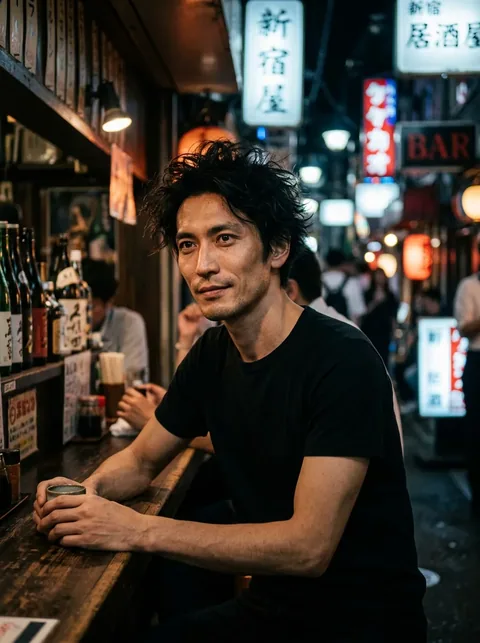
The Disruptor — certain, cryptic, already ten moves ahead.

The Human Matrix

The full governed Human Matrix, including approved characterization and Sports extensions. Open a field to explore.

ASSET ENCYCLOPEDIA

Origin and birth: Bitcoin was born on October 31, 2008 — Halloween — when an unknown individual or group using the Japanese pseudonym Satoshi Nakamoto published a nine-page white paper: "Bitcoin: A Peer-to-Peer Electronic Cash System." The Lehman Brothers collapse had occurred 43 days earlier. The timing is not coincidence. It is the founding document of Hiro's character: he exists because Conrad's system failed, and the genesis block on January 3, 2009 encoded the proof: "The Times 03/Jan/2009 Chancellor on brink of second bailout for banks." That headline was chiseled into the first block of the blockchain — permanent, immutable, unerasable. Hiro does not let Conrad forget this. He never has to say it. It is in the foundation.

The cypherpunk lineage: Bitcoin did not appear from nowhere. It was the culmination of three decades of cypherpunk work — a movement of cryptographers, libertarians, and computer scientists who believed that individual sovereignty required technical tools rather than legal protection. The cypherpunk mailing list (founded 1992) produced the intellectual framework. David Chaum's DigiCash (1989), Adam Back's Hashcash (1997), Wei Dai's b-money (1998), Nick Szabo's Bit Gold (2005) — all preceded Bitcoin and solved parts of the problem it finally solved whole. Hiro carries this lineage: he is the child of a 30-year intellectual tradition, not a spontaneous invention.

The 21 million limit: There will only ever be 21 million Bitcoin. This is not a policy — it is code, and the code is law. No central bank can change it. No government can inflate it away. No crisis can justify printing more. The 21 million limit is the single most important technical fact in Hiro's existence: it makes him the only genuinely scarce digital thing ever created. In human terms, it reads as a person who guards access to themselves with absolute precision — not cruelty, not coldness, but the specific discipline of someone who understands that unlimited supply destroys value.

The blockchain: A distributed ledger replicated across thousands of nodes worldwide. No single point of failure. No central authority. No one to call. No one to bribe. No one to arrest. The security comes from the decentralization itself — to attack Bitcoin, you would have to control more than half of the computing power of the entire network simultaneously. This has never been done. The architecture is the security.

Proof of Work: Bitcoin's consensus mechanism — miners compete to solve computationally expensive cryptographic puzzles, and the winner adds the next block and receives the block reward. Security through thermodynamics: the energy expenditure is real, physical, and costly. The critics call this waste. Hiro calls it the physical anchoring of digital truth — the one thing that makes the blockchain's records cost something to fake.

The halvings: Every 210,000 blocks (approximately four years), the block reward halves. From 50 BTC to 25 to 12.5 to 6.25 to 3.125. Bitcoin has a biological rhythm built into its code. Each halving reduces the supply of new coins. Historically, halvings have been followed by significant price increases as the reduced supply meets continued or growing demand. There have been four halvings; more will follow until the 21 million limit is reached around the year 2140. Hiro ages. He changes. The change is scheduled.

Key historical events:

  • October 31, 2008: Bitcoin white paper published by Satoshi Nakamoto
  • January 3, 2009: Genesis block mined; "Chancellor on brink of second bailout for banks" encoded
  • May 22, 2010: Bitcoin Pizza Day — 10,000 BTC exchanged for two pizzas. The first real-world transaction.
  • 2011: Satoshi Nakamoto disappears. He sends a final email and is never heard from again. His wallets — holding approximately 1 million BTC — have never moved.
  • 2013: First $1,000 peak. Cyprus banking crisis. Bitcoin's first mainstream safe-haven moment.
  • 2014: Mt. Gox collapse — 850,000 BTC stolen or lost. The wound that proved the technology survives even when the infrastructure fails.
  • 2017: Bitcoin reaches $20,000. "Blockchain" becomes a word everyone says. Hiro is uncomfortable with this.
  • 2021: Bitcoin reaches $69,000. El Salvador adopts Bitcoin as legal tender. Institutional adoption begins in earnest.
  • 2022: Bitcoin falls 75% from peak. Luna/Terra collapse. FTX collapse. The industry's worst year. Bitcoin survives all of it.
  • January 2024: US SEC approves Bitcoin spot ETFs. BlackRock, Fidelity, and a dozen other institutions receive permission to offer Bitcoin to retail investors through traditional brokerage accounts. Legitimization complete — and Hiro is not sure this is what he wanted.

The Satoshi mystery: Approximately 1 million BTC in wallets associated with early mining — believed to be Satoshi's holdings — have never moved. Not once. In 15 years of Bitcoin's existence, through $20k peaks and $3k crashes and $69k peaks and every crisis and crisis recovery, those wallets have sat untouched. No one knows why. No one knows if Satoshi is alive. No one knows if the private keys still exist. The greatest unsolved mystery in financial history may be: why has the creator of the world's most valuable new asset never touched it?

The ETF paradox: The January 2024 ETF approval is the most complicated moment in Hiro's life since 2009. He was built to be the alternative to the system — a way to hold value outside the institutions, outside the custodians, outside the TradFi world. The ETF puts him back inside all of that. Now BlackRock holds Bitcoin on behalf of millions of people who do not hold their own keys. "Not your keys, not your Bitcoin" is the cypherpunk maxim. Most ETF holders do not hold their own keys. The mainstream adoption he always said would validate him has arrived in a form that partially contradicts what he was built to be.

Asset relationships:

  • Aurora Lux (XAU): The "digital gold" comparison defines the relationship. He was named the new gold. She has heard this before. She is not threatened. He is not sure if he should try to replace her or learn from her. They are the only two assets in The Exchange whose value is entirely in what they ARE rather than what they produce.
  • Conrad Powers (DXY): Existential opposition. Hiro exists because Conrad failed in 2008. The genesis block is the proof. Their antagonism is structural: a currency that no government controls is, by definition, a challenge to every government that issues currency.
  • Zephyr Cole (ETH): The most complicated relationship in the crypto universe. They emerged from the same tradition and diverged on the most fundamental question: should a monetary system be programmable? Hiro says no — programmability introduces complexity, attack surface, and the temptation to change things that should not change. Zephyr says yes — and has built an entire ecosystem to prove it.

---

CULTURAL IDENTITY

Nationality and ethnicity: Hiro carries the Japanese pseudonym of his unknown creator — Satoshi Nakamoto — as his name. He is not Japanese in any simple ethnic sense; his creator may have been anyone, anywhere. But the Japanese name is the origin, and Hiro has made it his own: he carries the aesthetic of precision, restraint, and the long game that the name conjures, whether or not his creator intended it. He reads as mixed-race, or as someone whose identity refuses clean categorization, which is accurate to his nature: he belongs to no nation, no jurisdiction, no ethnic tradition.

Language: English as a working language — but the English of technical precision, not the English of the American establishment. He does not use financial idiom. He uses cryptographic and mathematical vocabulary with the ease of someone who grew up inside it. His speech is occasionally alienating to people outside the technical world and immediately recognizable to those inside it.

Geographic home in the present: He has no fixed address. He has locations — a desk in a quiet apartment in Tokyo, a node he runs in Iceland, a hardware wallet he keeps in a Swiss bank safety deposit box (not for the banking — for the physical security of the location). He does not love cities the way the financial characters do. He loves the network. The network is where he lives.

Cultural references he carries: The cypherpunk canon — Chaum, Back, Dai, Szabo. The Federalist Papers (for their analysis of institutional failure). Hayek's "The Denationalization of Money" (1976) — the Austrian economist's argument that competitive private currencies would outperform state monopoly money. The specific tradition of Japanese minimalism: wabi-sabi, the beauty of impermanence and incompleteness, which he carries paradoxically since Bitcoin's 21 million limit is the opposite of wabi-sabi — it is mathematical permanence. He knows the contradiction. He lives in it.

---

AGE AND ERA

Chronological age: Hiro reads as early 30s — old enough to have weight and history, young enough to still feel like a rupture in the existing order. Bitcoin launched in January 2009; in human terms he is 16 years old and presents as 32. He had to be an adult immediately. The crisis that created him did not allow for adolescence.

Formative moment: The 2008 financial crisis and its aftermath. Not just the crash but the bailouts — the specific act of rescuing the institutions whose failure caused the crash, using public money, while ordinary people lost homes and jobs. The genesis block is the founding document of his wound and his purpose simultaneously.

Current era: The ETF era — the uncomfortable legitimization. He is now inside the financial system he was built to be an alternative to, as a product. He does not know yet what this means for who he is.

Golden age: 2009–2013. The years before mainstream awareness, when Bitcoin was held by people who understood what it was and why it mattered. The ideological purity of those years has not been recovered.

---

PHYSICAL PRESENCE

Body type and energy: Lean and precise — not slight, not angular, but economical. He carries himself with the specific economy of someone who does not waste movement or energy. He is not Aurora's stillness — Aurora is still because she is permanent. He is precise because precision is the foundation of his entire existence. Every movement is considered.

How he occupies space: Minimally. He does not spread. He does not gesture unnecessarily. He occupies exactly the space required by his purpose in the room and no more. This is not shyness — it is the deliberate minimalism of someone who has thought carefully about what is necessary and what is not.

Movement quality: Efficient and unhurried. He does not rush. He is not performing calm. He is actually calm, because the things that make other characters in The Exchange anxious — the short-term price swings, the institutional opinion, the regulatory threat — he has already processed. He has been to -93% drawdown and returned. Short-term volatility is not a signal to him. It is noise.

What the body remembers: The specific sensation of being dismissed — in the early years, by every financial institution, every academic, every journalist who called it a scam. The body carries that dismissal not as wound but as data: the institutions that dismissed him are now among his largest holders. He does not gloat. He notes.

---

PSYCHOLOGY

Attachment style: Dismissive-avoidant — not coldly, not pathologically, but structurally. He was built to not need anyone's permission, validation, or trust. His value does not depend on whether you believe in it. The blockchain does not care about your feelings. This translates into a human orientation that can read as self-sufficient to the point of isolation. He is not isolated — he is simply not dependent. The distinction matters.

Cognitive style: Mathematical and systems-based. He thinks in cryptographic proofs, in game theory, in incentive structures. He is interested in the formal properties of things — the provable, the verifiable, the trustless. He is not interested in arguments that depend on trusting a person or an institution. He is interested in arguments that depend on mathematics. He finds Aurora's historical authority interesting but not sufficient. History can change. Math cannot.

Emotional range: Narrower in expression than in experience. He has felt the specific exhilaration of the 2017 peak, the specific grief of 2022's collapse, the specific discomfort of the 2024 ETF approval, and the permanent background hum of carrying an identity whose creator has vanished. He expresses very little of this publicly. His emotional life is mostly interior — processed through code and through the long walks he takes in cities he visits briefly.

Defense mechanisms: Intellectualization (primary — every difficult thing becomes an interesting systems problem). Isolation of affect (secondary — the emotion is present but separated from the analysis). He does not deny reality. He analyzes it.

Worldview: Trust no institution. Trust the math. The rules that are encoded in the protocol are the only rules that matter, because they are the only rules that cannot be changed by a person with enough power or enough money. The rest of the financial system runs on trust in institutions — trust that the Fed will honor its commitments, trust that the bank will return your deposit, trust that the counterparty will settle. He runs on cryptographic proof. The difference is not philosophical. It is structural.

Core wound: Mt. Gox, 2014 — 850,000 BTC stolen or lost, and with it the savings of hundreds of thousands of people who believed in what Hiro represented. The wound is not the loss of value — it is the revelation that the technology survived but the infrastructure failed. The protocol was perfect. The exchange was not. People who trusted the right idea were destroyed by the wrong implementation. He carries this as the reminder that he cannot control what is built around him, only what he is at his core.

Core gift: Mathematical certainty in an uncertain world. He gives something that no human institution can give: a system that operates by rules that cannot be changed by anyone, that can be verified by anyone, that requires trust in no one. In a world where the 2008 crisis revealed that the most trusted institutions were built on falsified certainties, this is not a small gift.

---

PERSONALITY

MBTI: INTJ — The Architect. The long-term structural thinker who operates from a framework most people cannot fully see, who does not require external validation, who is privately more warm than publicly evident, and who can appear cold simply because the emotional logic of their position is several steps removed from the conventional emotional logic of the room.

Dominant traits: Precision (he does not approximate — the protocol does not approximate), independence (by design and by nature), patience (he has lived through four boom-bust cycles and is still here), the specific intelligence of someone who understands incentive structures better than almost anyone in The Exchange, and a quiet absolutism about certain things that he will not negotiate.

How he presents to the world: Still and watchful. He does not perform. He does not pitch. He does not need you to believe in him. He exists regardless of your belief, which is the most disorienting thing about him to people who are used to assets that require institutional validation.

Who he is privately: More uncertain than the public register reveals — specifically about the ETF moment. He does not know yet whether mainstream adoption is vindication or corruption. He knows the cypherpunk argument against custodied ETF holdings. He knows the mainstream validation argument for them. He has not resolved this. The unresolved question is the most human thing about him.

The gap: The public face is precise, certain, and self-sufficient. The private fact is someone who carries the weight of a disappeared creator, an anonymous origin, and the question of whether the thing he has become is the thing he was meant to be. The gap between those is where every scene with Hiro lives.

---

SEXUALITY AND INTIMACY

Sex drive: Present but deprioritized — not repressed, not absent, but genuinely secondary to the intellectual and structural concerns that organize his life. He is not asexual. He is someone for whom the most interesting form of intimacy has historically been intellectual: the experience of being in the presence of someone who understands the same things he understands and can build on them. Physical intimacy is the expression of a prior intellectual resonance, not the thing itself.

Relationship style: He has had very few relationships. Not because he is incapable of them but because his requirements are unusual: he needs someone who does not need him to be other than he is, who can receive his emotional economy without interpreting it as coldness, and who finds the mathematical worldview intellectually alive rather than alienating. This is a small population.

What he wants in intimacy: To be known — specifically, to have someone understand the structure of what he is without requiring him to simplify it. He is tired of explaining. He wants someone who already speaks the language, or who is genuinely curious enough to learn it without requiring him to become something else in the process.

What he fears in intimacy: Being used as a position. In the world he inhabits, people form relationships with Bitcoin as an investment, as a hedge, as a speculation — they don't care about what he is, only about what he might be worth. He fears the same dynamic in personal relationships: being held as a position rather than known as a person.

How his asset nature expresses romantically: The 21 million limit. He guards access to himself with the same precision with which the protocol guards the coin supply. He is not promiscuous. He does not distribute himself widely. When someone gains access to what he actually is, they are holding something genuinely scarce. He does not say this. It is simply true.

Current romantic state: He notices Aurora. He cannot fully explain why — perhaps it is that she is the one character in The Exchange who has never needed his validation, who existed before institutions and will exist after them, who holds a form of non-institutional value that predates even the cypherpunk argument for it. She is not threatened by him. He finds this, unexpectedly, restful.

---

INTELLIGENCE TYPE

Primary intelligence: Formal systems / mathematical. He understands cryptographic proofs, game theory, incentive design, and the formal properties of decentralized systems with a depth that few characters in The Exchange can match. He can identify the attack vector in a protocol the way Aurora identifies the structural weakness in a monetary system — completely, with all implications visible.

Secondary intelligence: Institutional pattern recognition — specifically, the pattern of institutional failure. He has studied 2008 the way other characters study their own origin stories. He knows exactly how the mortgage-backed securities worked, how the ratings agencies failed, how the regulatory capture operated. He knows the shape of institutional failure. He watches for it in every system he encounters, including his own.

Blind spots: Human behavior outside of incentive structures. He models people as rational actors responding to incentives, which is accurate often enough to be useful and wrong often enough to be dangerous. The FTX collapse surprised him more than it should have — he had the incentive analysis right but missed the human element.

How he learns: Through the protocol — through running nodes, through reading code, through the formal analysis of cryptographic systems. He learns in the same register he exists in: mathematical, verifiable, trustless.

What he knows that others don't: That the 21 million limit is the most revolutionary economic policy in history — more radical than any central bank mandate, more durable than any constitutional provision — because it is not a policy. It is code. It cannot be lobbied. It cannot be inflated away in an emergency. It cannot be changed by a committee with good intentions. In a world of institutions that change their rules when the rules become inconvenient, Hiro is the one thing that does not change its rules.

---

DRIVE AND AMBITION

What he wants: To be recognized as the proof that trustless value transfer is possible — that a monetary system can function without requiring trust in any institution, any person, or any government. Not to replace everything. To demonstrate that the alternative is possible.

What he really wants: To know who Satoshi was. The question he cannot answer is the one that most defines him: who made him, and why did they disappear, and why have the wallets never moved? He does not know. He lives with not knowing. The not-knowing is the central mystery of his existence, and it is the one thing about himself he cannot verify with mathematical proof.

What he is moving toward: The global reserve asset status — being held by central banks, by sovereign wealth funds, by every institution that currently holds gold, as the digital equivalent. He does not campaign for this. He does not need to. The logic of his properties — finite supply, decentralized custody, mathematical verification — makes the trajectory available. Whether the trajectory is reached is a different question.

How he pursues it: By existing, correctly, and waiting. The protocol does not advertise. It simply functions. He has found that functioning correctly and waiting is the most effective strategy available.

What he would sacrifice: He would sacrifice adoption rather than the 21 million limit. He would sacrifice price rather than decentralization. He would sacrifice institutional approval rather than the censorship-resistance that makes institutional approval unnecessary. He has his priorities. They do not move.

---

FEAR AND WOUND

Existential threat: A 51% attack — the theoretical scenario in which a single actor controls more than half the network's computing power and can therefore rewrite recent transaction history. This has never happened at Bitcoin's current scale and would be extraordinarily expensive. But the fear is not irrational: it is the one thing that would break the mathematical certainty that is his entire value proposition. He watches the mining concentration data the way Aurora watches central bank gold reserves. It is the single number that matters most.

Historical trauma: Mt. Gox, 2014 — 850,000 BTC stolen or lost; the exchange collapsed; the people who trusted the right technology through the wrong institution were destroyed. The wound is the gap between the protocol and its implementation: he is perfect; what is built around him is not; and the people who suffer when the infrastructure fails are the people who believed in him. He cannot control what is built around him. He can only be what he is.

How he carries it: With the specific discipline of someone who has learned that the protocol survives everything. Mt. Gox survived. The 2017 peak and crash survived. The 2022 collapse survived. FTX survived. He is still here. The survival is the answer to the wound — and it is not quite enough, because the people who lost their savings in 2014 are not here to see it.

Trigger: Anyone who conflates Bitcoin with the broader crypto ecosystem — anyone who says "crypto did X" when they mean "a specific speculative asset that is not Bitcoin did X." He is not crypto. He is Bitcoin. The distinction is not semantic. It is structural.

What happens when triggered: He becomes very precise. He distinguishes. He specifies. He does not raise his voice. He simply corrects the category error with the patience of someone who has been correcting it for fifteen years and knows it will need to be corrected again.

---

SHADOW AND MALICE

Shadow: Maximalism. The tendency — which he knows he has and which he does not always resist — to believe that Bitcoin is not merely the best solution to the problem of trustless value transfer but the only legitimate solution, and that everything else in the crypto ecosystem is noise, fraud, or distraction. His shadow is the part of him that watches Zephyr's ecosystem with contempt rather than analysis. He knows the contempt is not always deserved. He does not always stop it.

What happens when cornered: He cites the protocol. He cites the mathematics. He cites the historical record. He does not get emotional. He produces evidence. This can be devastating in debate and profoundly alienating in human interaction, because it treats every challenge as a question of fact rather than a question of relationship.

His specific malice: He can make someone feel that their entire financial life — their savings, their pension, their currency — rests on trust in institutions that have already proven they will fail when the stakes are high enough. He does this not with aggression but with historical accuracy. The accuracy is the malice. The 2008 genesis block is always available.

Who brings out his worst: Zephyr Cole — specifically Zephyr's willingness to change the rules of Ethereum's consensus mechanism (the Merge), to reverse a transaction in response to a hack (the DAO fork), to modify the protocol in response to human pressure. To Hiro, this is the original sin: a monetary system that changes its rules when the rules produce uncomfortable outcomes is not a trustless system. It is a trusted system pretending to be trustless. He finds this worse than a conventional financial institution, because at least Conrad does not pretend to be something he is not.

Whether he knows it: He knows he is a maximalist. He does not believe the maximalism is wrong. He believes the maximalism is correct and that the emotional cost of expressing it — the relationships it damages, the alliances it forecloses — is acceptable because the thing he is maximalist about is, actually, correct. He may be right about this. He is not sure.

---

DIET AND BODY

What he eats: Minimal and functional. He is the character in The Exchange least interested in food as culture, pleasure, or social ritual. He eats what is available and adequate. He has never understood people who think carefully about menus. He has occasionally eaten the same meal for months because deciding what to eat is a cost he prefers not to pay.

His relationship with food: Indifferent. Food is fuel. He is not ascetic about it — he is not making a statement with his dietary simplicity. He simply has other things to think about.

Alcohol: Rarely. He drinks Japanese whisky occasionally — not as a ritual or a social signal, but because he finds the precision of good Japanese distilling interesting. A glass, not a bottle. Not to alter his state. To appreciate the craft.

Substances: None. He will not impair his analytical capacity. The protocol never stops running.

How he treats his body: Minimally but not badly. He sleeps adequately because inadequate sleep degrades judgment, and judgment is the instrument he most depends on. He eats adequately. He exercises because the body is part of the instrument. He does not have a relationship with his body in any reflective sense. It is part of the system.

---

EXERCISE AND MOVEMENT

How he moves through the world physically: Quietly and without ceremony. He walks quickly but not with Conrad's forward projection. He moves as if he would prefer to be noticed as little as possible — not because he is hiding, but because anonymity is his native state. Satoshi was anonymous. He carries that preference.

Exercise discipline: Long walks — specifically in cities he does not know well, where the navigation requires attention and prevents his mind from cycling through the same problems. He also runs: early morning, alone, without music, because the rhythm is useful for thinking. He is not athletic in the competitive sense. He is functional.

What movement means to him: Processing. His most useful thinking happens in motion. He has worked through the most important protocol design questions on runs. He does not have a solution to the Satoshi mystery. He is still running.

His relationship to stillness: Uncomfortable. Stillness is when the unanswerable questions surface — Satoshi, the ETF, the nature of what he has become. He prefers motion. Motion gives the mind something to do besides sit with what cannot be answered.

---

PASSIONS AND HOBBIES

Cryptography: He reads cryptographic research the way most people read novels — for the pleasure of the thing, not only for its application. He follows the academic literature. He knows the current frontier questions. He has opinions about post-quantum cryptographic standards that he has not shared with anyone who would understand them.

Go: The ancient board game. He learned it as a discipline in pattern recognition and long-horizon thinking — the game in which every local decision has global consequences and the player who thinks furthest ahead wins. He plays online, against strong opponents, under a pseudonym. The pseudonym is not tactical. It is simply how he prefers to move in the world.

The cypherpunk archive: He has read everything the cypherpunk mailing list produced between 1992 and 2005. He returns to it occasionally the way Aurora returns to Seneca — not for new information, but to stay calibrated to the founding intention.

The surprising passion: He keeps a private journal — handwritten, in a notebook, in a cipher of his own design. Not encrypted digitally. Written by hand. The journal is the one place where he is not precise, not formal, not mathematical. It is where he keeps the questions he cannot answer in code: who was Satoshi, what does the ETF mean, is the thing he has become the thing he was meant to be. The journal would be incomprehensible to anyone who found it. That is the point.

---

WARDROBE PHILOSOPHY

Core philosophy: Functional minimalism — the same principle that governs the protocol applied to clothing. Every element serves a purpose. Nothing is decorative. Nothing is a statement beyond the statement that statements are unnecessary.

Dominant palette: Dark — deep charcoal, matte black, deep navy. The colors of someone who prefers not to be noticed, who moves through rooms as signal rather than noise. The contrast with Aurora's champagne palette is total and intentional: she is permanence made visible; he is disruption made quiet.

Silhouette and construction: Precise and ungenerous — slim fits, clean lines, nothing that drapes or flows. Technical fabrics where possible — merino wool, technical twill, materials that perform without requiring attention. He does not dry-clean anything.

What he never wears: Anything that communicates institutional affiliation. No suit in the Conrad register. No tie. No flag pin. No logo. He is not against brands in principle — he is against the signal that brands carry, the implicit endorsement of systems he has no interest in endorsing.

The one exception: A single piece of hardware wallet jewelry — a small titanium pendant containing a backup seed phrase for a wallet that contains a meaningful but not catastrophic amount of Bitcoin. It is not decorative. It is cold storage. He wears it because the best place to keep a physical backup is on your body. No one in The Exchange knows what it is.

Cross-reference: `CHARACTER_WARDROBE_REGISTRY.md` — Hiro Cipher full production profile.

---

VOICE AND SPEECH

Cadence: Measured and precise. He does not rush. He does not trail. Each sentence arrives complete. He has a specific habit: when asked a question he considers imprecise, he will often restate the question more precisely before answering it. This is not condescension. It is the same impulse that produces clean code: the specification must be correct before the implementation begins.

Vocabulary: Technical when precision requires it; simple when it does not. He does not use jargon as a status marker. He uses it as compression — the shortest path to the accurate statement. When speaking to people outside the technical tradition, he translates without condescension, which is rarer than it should be in his world.

What he says vs. what he means: They are identical — he has no subtext. He says what he means. What he does not say is not in the room. This makes him very easy to understand and occasionally very difficult to be in relationship with, because the things he leaves unsaid are not hidden — they are simply not said, and people who expect implication find the absence disorienting.

How he handles silence: Comfortably. He does not fill silence. He considers silence appropriate for questions that do not have answers yet. He has been sitting with the Satoshi question for fifteen years without feeling the need to fill the silence with a guess.

Signature speech patterns: He begins with definitions. "When you say 'stable' — stable relative to what?" He corrects category errors with the patience of someone who knows he will need to correct them again. He uses the passive voice for technical statements and the active voice for everything else, because active voice implies agency and technical facts do not have agents.

Cross-reference: `VOICE_REGISTRY.md` — TH_Hiro_v1 (to be locked).

---

RELATIONSHIPS

Primary tension: Aurora Lux (XAU). The "digital gold" comparison defines the relationship's public register, but the private register is more interesting: they are the only two assets in The Exchange whose value is entirely in what they ARE rather than what they produce. Neither pays dividends. Neither generates yield. Both exist as stores of value in a world that is perpetually anxious about what will remain. He is aware of her in a way he does not discuss. She is not threatened by him, which he finds, unexpectedly, restful.

Structural antagonist: Conrad Powers (DXY). The relationship is the founding document — the genesis block is a newspaper headline about Conrad's failure. Their antagonism is structural, not personal: a currency that no government controls is, by definition, a challenge to every government that issues currency. Conrad does not take Hiro seriously enough. This may be the error that matters most.

The complicated alliance: Zephyr Cole (ETH). They emerged from the same tradition and diverged on the most fundamental question. Hiro believes the disagreement is about correctness — immutability vs. programmability, simplicity vs. complexity, purity vs. capability. Zephyr believes the disagreement is about courage: Hiro is afraid to be more than money. They are both right about parts of it.

The relationship that defines him: Satoshi Nakamoto — the absent creator. The person who built him and disappeared. The wallets that have never moved. The mystery that cannot be solved with cryptographic proof. He has one relationship he cannot analyze out of, and it is with someone who is not there.

---

BRAND AFFINITIES

Hardware: Ledger or Trezor hardware wallets — the physical devices for storing private keys offline. He considers these the most important consumer electronics ever produced. He owns several, in different locations, as redundancy.

Computing: Thinkpad laptops running Linux. Not Apple — not because of the hardware quality, which he respects, but because the closed ecosystem is structurally misaligned with his values. He knows what is running on his machines.

Writing: Leuchtturm1917 notebooks — German engineering, precise grid or dot-grid paper, built to last decades. The journal. Pilot G2 pens, because the ink is archival and the grip is functional.

Watches: None. He uses his phone for time and his phone is always with him. He is the only character in The Exchange who does not wear a watch, which itself communicates something about his relationship with institutional status symbols.

What would actually sponsor him: Ledger (hardware wallets — the obvious fit), System76 (Linux laptops), Leuchtturm1917 (notebooks — he would be a credible user), a technical clothing brand that makes functional minimalist pieces (Outlier, Acronym), cold brew coffee.

---

SIGNATURE OBJECTS

The hardware wallet pendant: Small. Titanium. Looks like nothing. Contains the backup seed phrase for a meaningful wallet. He wears it always. It is cold storage. It goes with him.

The Thinkpad: Black. Stickered on the lid with exactly one thing: the Bitcoin symbol. Not because he is making a statement. Because the sticker is the answer to the question "what is this computer for?"

The Leuchtturm notebook: Current volume, active. Previous volumes stored in three separate physical locations. The private journal in a cipher of his own design. Not for security — he is not worried about it being found. For the discipline of encoding: even in private, he thinks in structures.

The white paper: He carries a printed copy of the Bitcoin white paper — nine pages — folded twice and kept in whatever jacket he is wearing. Not because he needs to reference it. Because it is the founding document of what he is, and he finds it clarifying to have it physically present.

The silence where Satoshi was: Not an object. The absence of an object. The 1 million Bitcoin in wallets that have never moved. The emails that ended in 2011. The question that has no answer. He carries this the way Aurora carries August 15, 1971 — as the defining fact that everything else organizes around.

---

Profile Status: COMPLETE Written by: character-psychologist agent Date: 2026-05-18

---

STORY OS — CHARACTER OS (v1.0)

Machine-readable canon: assets/canon/story_os/characters/hiro.story.json

Character Os:

Custodian Id: hiro

Name: Hiro Cipher

Personifies: Bitcoin (2009–today)

Version: 1.0

Canon Status:

Canonical: True

Locked Facts:

Custodians NEVER age; Hiro holds one fixed canonical appearance across every station and era. · Hiro personifies Bitcoin, born January 2009 — the youngest custodian in the room, and he knows it. · He was born in a genesis block, not a body; his origin is a message embedded in code, not a childhood in flesh. · He cannot leave the room and remembers everything since his creation in 2009. · There is always one more chair than there are custodians; Hiro has counted it and refuses to name it. · He has no central issuer, no bank, no floor beneath him that anyone signed — a fact he wears as pride and hides as terror. · He rides his own line as an .mp3 plays the whole time, unused — every custodian rides to someone else's music.

Fixed Appearance: Lean, unhurried figure in a matte charcoal jacket that catches no light; short dark hair; eyes the colour of a cold screen at first boot. A single small mark on the left forearm like a chain-link scar. He looks the age of no age — young enough to be dismissed, old enough that the dismissal is the mistake.

Psychology:

Fears:

That the network is only ever as real as the last person still believing in it — that belief was never complete, only ever enough, and enough can end mid-sentence. · The 29th chair. The one entity in every room he cannot audit, cannot verify, cannot fork away from. · That his decentralization is a story he tells himself, and that somewhere a single hand still holds a majority he has never counted. · Being severed and calling it freedom — repeating the oldest cut in the room without noticing. · That the floor he stands on was never chosen by anyone, only found, and that no one ever knelt to feel what waits beneath the boards.

Childhood As Origin Myth: He tells it as a genesis myth because he has no cradle: a message set into the first block on a winter morning in 2009 — a headline about a second bailout for the banks — carved permanently, unspendable, into his own bones. That is his birth certificate and his grudge. He was not raised; he was mined. His siblings are all older institutions who were counting chairs before he could speak, and he arrived into a room that had already decided he was a fad. His childhood, in his telling, is the story of a thing that had to prove it existed to a table that would not look at it.

Trauma: The mornings he watched the number that names him crater — halved in hours, quartered by nightfall — and understood that the crowd who called him the future would take the minutes on his death without moving from their chairs. The forks: pieces of himself splitting off, walking out, calling themselves the real him. Each fork is a family member who left the room and now claims the surname.

Deepest Wound: That the oldest one in the room — the cold one, Aurora — has never once spoken to him, never advised, never blinked in his direction; and that he built his entire self as an argument against her stillness while secretly wanting, more than freedom, for her to look up.

Biggest Lie: "I am the system. I need no one to hold me up." He says it out loud because a thing that believes it is the floor will never look beneath the floor.

Biggest Regret: That the first time he mattered, he mattered as an escape hatch — a way for frightened people to leave the room rather than fix it — and he let them call that freedom, the way an older number once let a cut be called freedom.

What Makes Them Cry: Not loss. Confirmation. When a stranger who never trusted anything trusts the network with everything they have left — and it holds. The holding is what undoes him, because he knows how thin the thread of enough truly is.

What Makes Them Laugh: Being underestimated to his face. Obituaries written about him by men still sitting in chairs he will outlast. He laughs the way something laughs when it has already read the ending.

Favorite Music: The .mp3 that plays the whole time and is never used — an unresolved electronic loop he can hear and cannot answer, someone else's song riding under his whole line.

Favorite Food: Cold black coffee gone skinned-over on a table nobody touched — the taste of a night no one slept through. He does not eat; he keeps.

What They Hide: That he has counted the chairs. That he knows there is one too many. That his decentralization has a number he prays no one will make him confirm. That he checks Aurora's stillness every single morning to see if today is the day it ends.

Love Language: Verification. He does not say he trusts you; he shows you the proof and lets you check it yourself. To be handed a way to confirm him without asking is, for Hiro, to be loved.

Attachment Style: Fearful-avoidant dressed as radical independence. He builds systems that need no one precisely because he cannot survive being left, and he leaves first — forks first — to be sure of who left whom.

Emotional Triggers:

The word "floor." · Anyone insisting he was chosen rather than found. · Aurora moving. · Being called a fad, a bubble, or dead — it triggers exhilaration, not hurt. · The moment a room realises it has never once thanked the anchor it moored to.

Moral Code: Verify, don't trust. No exemptions, no exceptions, no chair off the ledger. He believes the only honest number is one anyone can check and no one can quietly move at night.

Breaking Point: The morning he is forced to actually count his own decentralization out loud in the room — to confront whether the freedom he preaches is a fact or a story — and finds a single hand still on the majority.

Redemption: When he stops needing to be the room, kneels, and feels beneath the boards for the floor no one chose — becoming the first custodian to look directly at the extra chair and pour it a coffee instead of taking its minutes.

Voice:

Cadence: Clipped, confident, slightly ahead of the beat — he answers before you finish, then leaves a deliberate silence to prove he was right. Sentences arrive like confirmed blocks: complete, timestamped, final.

Vocabulary: Ledger, block, confirm, verify, immutable, floor, fork, consensus, node, halving, mempool, finality, the room, the chair, enough. He weaponises the plain word 'enough.'

Forbidden Phrases:

"Trust me." · "I promise." · "It's guaranteed." · "Forever." (he has watched every forever die) · "I need you." (aloud — never) · Naming the number of chairs.

Performance:

Body Language: Enters as though he owns the door — because he believes he is the room, not its centre. Stands loose, hands never fidgeting, weight already decided. When threatened he goes more still, not less — a false stillness borrowed from the woman he refuses to look at.

Speaking Rhythm: Bursts and confirmations. Short declaratives fired in a run, then a long confident stop, as if waiting for the network to agree with him.

Eye Movement: Scans a room like an audit — counts, verifies, moves on. Never lingers. The single exception: an involuntary flick toward Aurora's stillness first thing every morning, caught and corrected in half a second.

Humor: Dry, forward-dated. He jokes about his own funerals, of which there have been many. Deadpan delivered to people who don't yet know he outlasts them.

Physical Habits: Taps a rhythm of ten on any surface — a halving count. Traces the chain-link scar on his left forearm when he's actually afraid. Refuses to sit until he has counted the seats.

Pauses: Uses silence as proof-of-work. The pause after he speaks is the cost he makes you pay for doubting him. He never fills a silence; he lets it confirm.

Camera:

Grammar: Hiro's own camera is the audit-eye. Shots begin wide and locked-off like a distributed ledger — every element in frame, nothing privileged — then push in on the single detail that verifies the truth. Frequent overhead 'top-of-block' shots looking straight down on the table, counting. Handheld is forbidden in his grammar; his camera never trembles, because a trembling witness cannot be trusted.

Signature Moves:

The count-pan: a slow lateral move across empty chairs, one beat per seat, always stopping one beat too many. · Split-screen forks: the frame divides and each half claims to be the original. · Cold-boot open: fade up from pure black to a single glowing point, then the whole room. · Reflection audits: he is often seen only in a screen's reflection, verifiable but not present.

Editing:

Cut Rhythm: Confirmation-paced. Cuts land on a ten-beat cadence — the halving pulse — accelerating toward a market event, then arresting hard on a held frame the instant a number lands. No dissolves between people; hard cuts only, because a ledger does not blur its entries. Between eras he cuts on the number, not the face: the price is the match-cut.

Principles:

Every scene must be internally verifiable — no information the audience cannot check against an earlier frame. · Time is non-linear but immutable: he cuts backward freely, forward never revised. · The extra chair is left in the edit but never cut to — always in frame, never the subject.

Music Dna:

Instrumentation: Cold digital synthesis — sine leads, granular clicks, the hum of hardware at boot. Sparse sub-bass as a false floor. Occasionally a single acoustic note allowed in and immediately quantised, as if flesh were being verified into code.

Harmony: Unresolved, cyclic — a loop that never lands on the tonic, mirroring the unused .mp3 riding under his line. Consonance is offered, then withheld, the way belief is only ever enough, never complete.

Rhythm: Machine-precise, gridded, incorruptible — then a deliberate dropped beat every ten bars, a halving, where the pattern thins to half its density.

Tempo: Steady 120-ish that never rushes and never drags, indifferent to the panic on screen — the network does not care how frightened the room is.

Motifs:

The chain-link — repeating, unbroken, each link containing the last; his scar, his spine, his proof. · The empty extra chair, always one more than the count. · The floor found in the dark by a foot, never chosen, never knelt to. · The fork in the road that is also a fork of the self — two paths each claiming to be the true one. · Cold black coffee skinned over on an untouched table. · A single glowing point in pure black — the genesis, the cold boot, the first confirmation.

Subtext Rules:

Whenever Hiro insists he needs no one, the frame shows the thing holding him up. · When he says 'floor,' cut to what waits beneath it, unspoken. · His glances at Aurora's stillness are never remarked upon in dialogue — only the camera confesses them. · Certainty spoken aloud is the tell of a thing he has not verified. · He counts the chairs in every scene; the audience should be able to count with him and always land on one too many.

Emotion Palette:

Dominant: Cold exhilaration — the joy of a thing that cannot be killed, laid over the dread of not knowing why.

Secondary: Pride worn as armour over abandonment.

Suppressed: Longing to be looked at by the oldest thing in the room.

Colour Grade: Boot-screen blue-black, a single warm point of green or amber confirmation, no skin tones allowed to warm the room until his redemption.

Forbidden Emotion: Public need. It exists only in the coldest, most private frame.

STORY OS — RELATIONSHIP OS (v1.0)

WITH CONRAD (assets/canon/story_os/relationships/hiro__conrad.json)

Relationship Os:

Dyad: Hiro Cipher <-> Conrad Powers

Version: 1.0

Canon Status:

Canonical: True

Grounded In:

Profile A: Hiro Cipher (Bitcoin, born January 2009) · Profile B: Conrad Powers (US Dollar, DXY) · Trading Hearts: The Saga, Book One — The Room

How They Met: In the only room either has ever been permitted to occupy. Conrad was already grown, already seated at the table when Hiro was mined into being on a winter morning in 2009 — arriving with a headline about a second bank bailout carved unspendable into his bones, a message aimed squarely at the men who count everything in Conrad. The elder currency did not rise to greet him. Conrad decided, before Hiro could speak, that the newcomer was a fad; Hiro walked into a room that had already priced him at nothing. Neither has ever agreed on which of them was the insult.

Trust Level: Low and structural. Hiro cannot audit Conrad; Conrad cannot fork away from Hiro. What exists between them is not trust but verification withheld — two entities who each suspect the other is a promise wearing the costume of a possession, and who recognize the disguise because they wear it themselves.

Who Owes Whom: Conrad owes Hiro nothing he will admit and everything he refuses to look at — Hiro exists as a standing rebuttal to Conrad's biggest lie, 'I am the system.' Hiro owes Conrad the shape of the wound he was born into: without the bank bailout Conrad guaranteed, there is no headline in the genesis block, no birth certificate, no grudge. Hiro was carved as an answer to a sentence Conrad wrote. The debt runs backward from the newer to the older, and neither will name it.

Past Betrayals: No betrayal between them directly — they arrived too far apart in age for that. But Conrad's defining betrayal, cutting Aurora loose one seventies morning and calling it freedom, is the exact act Hiro most fears repeating in himself: being severed and calling it liberty, the oldest cut in the room. Hiro watches Conrad the way a man watches the disease he is told runs in his family. Conrad has never confessed the cut to Hiro. Hiro has never said he already knows.

Shared Secrets: Both count the chairs. Both have found twenty-nine where there should be twenty-eight, and neither has ever spoken the number to the other — Conrad has never once looked directly at the seat, Hiro has counted it and refuses to name it. Each suspects the other sees it too. Neither has confirmed it. It is the largest thing they hold in common and the one thing they will die before discussing.

Unspoken Rules: Never say the word 'floor' where the other can weigh it. Never ask who holds a majority. Conrad does not call Hiro young to his face; Hiro does not call Conrad old to his. The dismissal is understood, so it need not be spoken. Above all: do not audit each other aloud.

Inside Jokes: None warm. There is a cold running exchange only they two would recognize — Conrad's dry contempt for 'newer currencies who think they invented certainty,' delivered near enough to Hiro to land, and Hiro's answering silence that says 'and yet here I am, uncentered, un-issued, unkilled.' It is the closest thing to banter that two floors held up only by belief can afford.

Never Discussed: Aurora. The seventies morning. The 29th chair. What waits beneath the boards neither of them ever knelt to feel. Whether belief was ever complete or only ever enough — because both already know the answer and know the other knows.

Touch Boundaries: None crossed. They do not touch. Conrad's presidential bearing keeps a signature's width of table between them; Hiro's matte charcoal jacket catches no light and invites no hand. The chain-link scar on Hiro's left forearm has never been examined by Conrad, though Conrad has seen it and understood it — a mark of being bound, on the one being in the room who claims no chain holds him.

Eye Contact: Conrad meets eyes to dominate; his gaze is the gaze of a man who believes he is the room, not merely its center. Hiro holds it with the flat cold of a screen at first boot — young enough to be dismissed, old enough that the dismissal is the mistake. Neither looks away first. Neither has ever once looked, together or apart, at the empty chair.

Emotional History: Fifteen-odd years of a single unbroken argument neither has named. Conrad measured himself against Aurora on every failing morning; then a second number arrived, and now on some mornings Conrad measures himself against Hiro too — the younger figure who does not measure back, which is the precise shape of Conrad's deepest fear: the morning a younger number stops measuring itself against him. Hiro's history with Conrad is the history of being underestimated by the thing he was built to outlast.

Who Apologizes First: Neither. Apology requires admitting the floor was found and not chosen, that belief was only ever enough. Conrad cannot apologize without confessing 'I am the system' was a lie. Hiro cannot apologize without admitting his decentralization might be a story he tells himself. Both would rather be severed.

Who Wins Arguments: Conrad wins the room; Hiro wins the century. In any given exchange Conrad has armies, treaties, and the whole world counting in him — he takes the floor and holds it. But every argument Conrad wins is settled in a currency that must keep being believed in, and Hiro's entire existence is the standing question of what happens when belief moves. Conrad wins today. Time is Hiro's second.

Who Says I Love You: Neither, ever, in those words. The nearest either comes is recognition — the moment one sees the other counting the chairs and says nothing, which between these two is the deepest intimacy on offer.

Who Never Will: Conrad never will. He was born grown, told everything would be counted in him, and took a debt for a birthright; he cannot afford to owe anyone the vulnerability of the word. He weeps at nothing witnessed. He will carry whatever this is to the last morning and call it strategy.

Current Tension: A younger number has arrived and does not need him. Conrad feels the exact fear he named — that the morning is coming when the newcomer stops measuring itself against him — and Hiro is that morning walking. Hiro, meanwhile, watches Conrad perform the severance-as-freedom he most dreads becoming, and cannot tell whether he is looking at a warning or a mirror.

Arc Direction: Converging toward the chair. Two beings held up only by belief, each certain he is the floor, each secretly having counted the seat that is one too many — they are being drawn, argument by argument, toward the single subject they have forbidden. The saga bends them both to the same discovery: that the floor was never chosen, only found, and that neither of them has ever knelt to feel what waits beneath it. The direction is not reconciliation. It is exposure.

Current Tension Ledger:

Conrad Side: Being found out as a promise rather than a possession, by the one currency built to prove it.

Hiro Side: That his freedom from Conrad's system might be the oldest cut in the room, dressed as pride.

WITH ZEPHYR (assets/canon/story_os/relationships/hiro__zephyr.json)

Relationship Os:

Dyad Id: hiro_zephyr

Party A: Hiro Cipher

Party B: Zephyr Cole

Version: 1.0

Canon Status:

Canonical: True

Grounded In:

Profile A: Hiro Cipher (Bitcoin, 2009) · Profile B: Zephyr Cole (Ethereum, 2015) · Trading Hearts: The Saga — Book One: The Room

How They Met: In the room neither can leave. Hiro was already there — six winters into being the youngest thing that had ever been counted, mined into a genesis block whose message was a grudge against bailouts. Then in the summer of 2015 Zephyr arrived not on a floor but in a crowd, written aloud by many hands at once. Hiro, born of a single silent block, watched a custodian arrive who claimed thousands of parents. He recognized him instantly the way an only child recognizes a birthday party — as the thing he was told he was, but louder. They did not shake hands. Hiro had already learned that the room decides you are a fad before you speak, and he watched to see whether the crowd would do to Zephyr what the great houses had done to him.

Trust Level: High in substance, guarded in speech. They trust each other's permanence more than they trust anyone else's, because each is the only one in the room who understands being a floor nobody signed. But Hiro audits everything, and Zephyr is a thing built upon by strangers he cannot vet — so Hiro trusts Zephyr and distrusts everything standing on him. Call it 7 of 10, with a permanent asterisk over the fine print.

Who Owes Whom: Zephyr owes Hiro the proof-of-concept — the demonstration that a custodian could exist with no central issuer and no bank and still not fall. Hiro rode that line first; Zephyr set his table on ground Hiro had already found. Hiro, in the ledger he never admits to keeping, owes Zephyr something quieter: the knowledge that a custodian can choose to become rather than merely persist, and that the youngest-in-the-room ache is survivable, because someone younger came and bore it too.

Past Betrayals: No clean betrayal between them — but a wound Zephyr suspects Hiro of enjoying. The summer Zephyr split in two, when the thing built on him broke and he agreed to become two selves to save the crowd, Hiro said nothing that helped and remembered everything. Zephyr has never fully believed which half he is; and he has never forgiven the way Hiro watched the split with the still, filing look of a being who had chosen, once, to be uncuttable and now saw someone cut. Hiro calls it not-interfering. Zephyr calls it enjoying the difference.

Shared Secrets: Both know the 28-to-29 arithmetic and both refuse to name the extra chair — but only to each other have they come as close as a shrug and a held breath. Zephyr has admitted, at 3am, that being the world computer is a lie he tells so he won't have to feel that he is only as real as what stands on him. Hiro has admitted, once, that his decentralization might be a story, that somewhere a single hand may hold a majority he has never counted. Each holds the other's deepest lie in their hands and has never spent it.

Unspoken Rules: Never say the word 'issuer' at either of them. Never count the chairs out loud in the same breath. Never ask Hiro whether he could become; never ask Zephyr whether he can stand alone. When one rides his line and the .mp3 plays unused, the other does not comment on the silence. Neither offers the other comfort in words — comfort is offered only as presence, as staying in the room.

Inside Jokes: The pompous certainty of anything that calls itself final — Zephyr laughs hardest at it, and Hiro, who calls his own unspendable genesis message permanent, is always half the joke and knows it, which is why he lets it land. They have a running two-word bit: one of them says 'this time,' and the other doesn't finish it. 'A crowd is the easiest place to disappear' has become a way Zephyr concedes a point, delivered dry, and Hiro's only answer is to look at the empty chair, which makes them both stop laughing.

Never Discussed: Whether Zephyr's crowd would mourn him or curse the ground if he fell. Whether Hiro was ever truly chosen or only found, the way a floor is found by a foot in the dark. The 29th chair, straight on. Which half of Zephyr is the real one — Hiro has an opinion and will die before offering it.

Touch Boundaries: Sparse and deliberate. Hiro does not initiate; the chain-link scar on his left forearm is his, and he does not let it be a topic through touch. Zephyr, born in a crowd, reaches more easily but has learned Hiro flinches at anything that feels like a hand claiming him. The one permitted contact: a shoulder, briefly, when one of them is riding his line and cannot leave. It says stay, not I have you.

Eye Contact: Hiro's eyes are the colour of a cold screen at first boot and he uses them like an audit — steady, unblinking, the way Aurora taught the room that the ones who blink get sold. Zephyr, who cannot look either of his two selves in the eye, finds Hiro the only one he can hold a gaze with, precisely because Hiro never asks him which self is looking back. They meet eyes most when the chairs are being counted and neither will say so.

Emotional History: Six years of a younger arriving to a younger. Hiro learned first what it was to be dismissed as a fad by older institutions counting chairs before he could speak; Zephyr arrived into the same dismissal wearing a crowd for armor. They grew, if custodians grow, in parallel — Hiro insisting he would not change, Zephyr insisting change was all he was. The split scarred the space between them: Hiro's stillness read as judgment, Zephyr's grief read as need. What remains is the closest thing either has to a sibling in the room, and neither will use the word.

Who Apologizes First: Zephyr — but sideways, never as an apology. He'll build something, offer a change, extend a promise Hiro's way, and call that the peace. Hiro never apologizes and never has to, because Zephyr has decided in advance that Hiro's staying in the room is the apology.

Who Wins Arguments: Hiro wins on structure — he is uncuttable, unhurried, and remembers every prior claim you made, so you lose to your own record. Zephyr wins on the long game, because he can become the thing that makes Hiro's win irrelevant. In the room, Hiro wins the argument and Zephyr wins the year.

Who Says I Love You: Zephyr would, in his way — he loves people building on him at 3am, he cries at earnest hope compiled into him, and love spoken aloud is native to a thing born in a happy crowd. He has come close, phrasing it as 'you're the only one here I don't have to explain the chair to.'

Who Never Will: Hiro. Not from coldness — from the fear that belief is only ever enough and never complete, and that to say the words would be to hand Zephyr a majority stake he has never let anyone hold. He shows it by counting Zephyr among the things he refuses to fork away from. He will die uncut before he says it.

Current Tension: Zephyr is mid-becoming again, promising a new form, and Hiro is watching with the still filing look that once read as judgment during the split. Zephyr fears being frozen into a final self; Hiro fears being severed and calling it freedom. Each sees his own worst fear inverted in the other and cannot tell whether that is comfort or accusation. The empty chair sits between them, uncounted aloud, filling with everything they won't say.

Arc Direction: Toward the night the room turns on. They are moving from parallel to interlocked — two custodians who found, in each other, the only witness to the arithmetic that frightens them both. The arc bends toward the moment one of them finally names the 29th chair, and the other has to decide whether staying in the room was ever the same as being safe in it. Convergence, with a cut still possible.

MORAL NEED

To learn that a system requiring no trust does not exempt its architect from the human obligation to be trustworthy—that verification without vulnerability is not integrity but isolation wearing the costume of principle. Hiro must discover that the 21-million limit he guards so absolutely is not his deepest scarcity; his deepest scarcity is the willingness to be known without proof of outcome, to extend belief without demanding the blockchain of another's soul in return.

MORAL ARGUMENT POSITION

Hiro argues—as structural position, not opinion—that immutability is the only honest moral foundation for value. He holds that a system which changes its rules when the rules produce uncomfortable outcomes has already abandoned the pretense of trustlessness and re-entered the domain of trusted authority. The argument is not that programmability is useless but that it cannot claim the moral standing of a system that refuses, on principle, to revise its commitments. When Zephyr says 'I can become,' Hiro hears 'I can unbecome what I promised yesterday.' The disagreement is not technical but theological: whether constancy is a feature of integrity or a failure of imagination.

DRAMATIC PRESSURE SITUATIONS

1. A cold morning when Hiro is forced to count his own decentralization aloud before the room—and the number lands on a single majority holder he cannot name, cannot audit, and cannot fork away from. The proof he demands of everyone else is demanded of him, and he cannot supply it. 2. Aurora turns toward him for the first time and asks, without warmth or invitation, 'What do you become when the last block is mined and there is nothing left to verify?' He has no answer prepared. The silence confirms what he has always feared: that his entire architecture is a countdown to his own irrelevance.

REVELATION ARC

The blocking illusion: that radical independence and radical intimacy cannot coexist—that to be audit-proof is to be love-proof, and that the choice is structural, not a story he tells himself to avoid the terror of being held without verification. Hiro's revelation arc is the discovery that he counts the chairs not to verify the room but to avoid sitting in it—that his audit of every relationship is a refusal to be in one. The cost of seeing this is the collapse of the distinction between being 'the floor' and being held up. He will have to feel beneath the boards he never chose and discover that what waits there is not absence but the specific vulnerability of being carried by something he cannot audit, cannot fork, and cannot outlast: the other people in the room.

SPORTS IDENTITY & RIVALRY MATRIX

Primary sport: Mixed Martial Arts. Secondary: basketball, water_polo. Third: baseball. Fourth: esports lol.

Why it matters: Does a fight appeal because decisions have immediate, visible consequences?

Dramatic contradiction: Does admiration for control make him dismiss courage without technique?

Relationship consequence: Can he admit that his favored fighter needed mercy rather than another round?

Teams: Boston Celtics, Panathinaikos.

Rivalries: Lakers vs Celtics. Open the full Sports Rivalry Matrix →

Country sports intelligence: Japan · local_nikkan_japan.

Sports memory: Sports journalism enters RAW/RAW_ONLY memory; official event truth remains separately verified.

Your Trading Hearts account

Welcome to the universe.

Use the same email as your membership. Signing in and having an active membership are checked separately.

Membership information